A few days before Station Narva, the city turns into a list of errands. The benches need to be taken to another site, the sign to the toilet needs to be placed in the rain, and the flags need to be secured so that they fit into the frame and do not come undone in an hour.
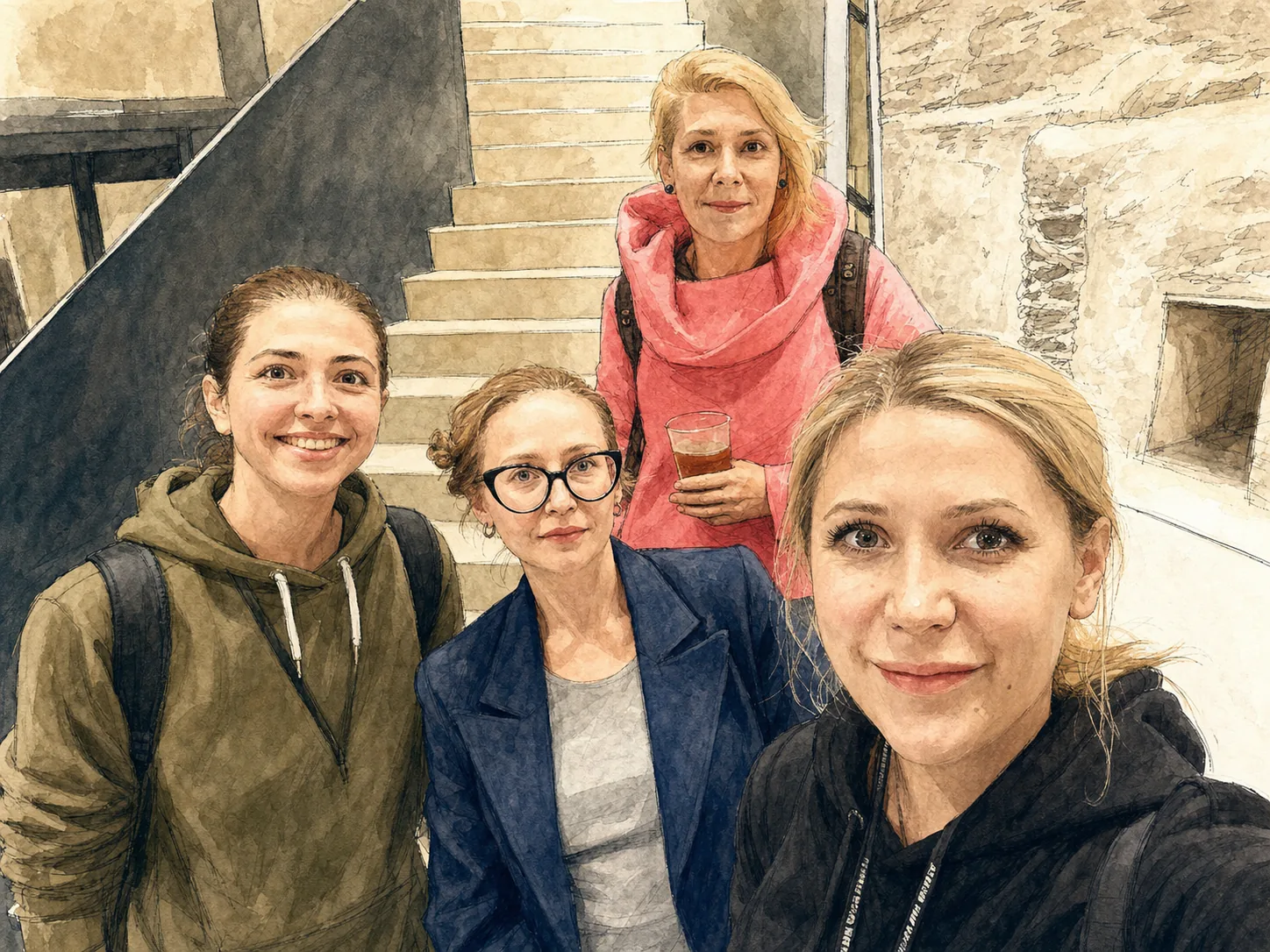
Anya and Alena know this list almost by heart. Anya came to the festival team from the Ro-Ro art club, Alena has been working as a volunteer for eight years. We talked about people who put together a festival before the public arrives and continue to put it together after the audience has already left.
From Ro-Ro to the festival team
Lelik Ivanov: How did you get into volunteering?
Anya: I got into the general Tallinn Music Week team through the Ro-Ro art club. I worked there as an art director, and the club was one of the Station Narva venues. At first I hosted the festival as an employee of Ro-Ro. Then I left the club but stayed with the festival team.
For years I helped for free. I didn’t really remember this myself - Alena reminded me. Then I was officially accepted into the team, and now I get paid for this work. So technically I’m no longer a volunteer. But I have my own group of volunteers, with whom we are engaged in local marketing and site design.
Alena: In the first year I didn’t participate at all and didn’t even go to Station Narva. Then I saw how big a festival this was for our city and wanted to help. When the call for volunteers was announced, I sent in an application.
In 2026, Station Narva will be held for the ninth time, and for me this will be my eighth year of volunteering.
Lelik Ivanov: Anya, what is the name of your job, if you translate the position from festival language to regular language?
Anya: On the team website my position is listed as turundusassistent - marketing assistant. I take the general advertising scheme of the festival and lay it out in Narva and specific venues.
Before the festival, these are leaflets, screens and advertising in the city. I perform at the Noorus SPA Hotel in Narva-Jõesuu. One day I saw a free screen there and thought: it would be nice to put an advertisement for Station Narva here. I suggested it to Eva Johanna Lepikov, who is responsible for marketing. Then we contacted the people on site and came to an agreement.
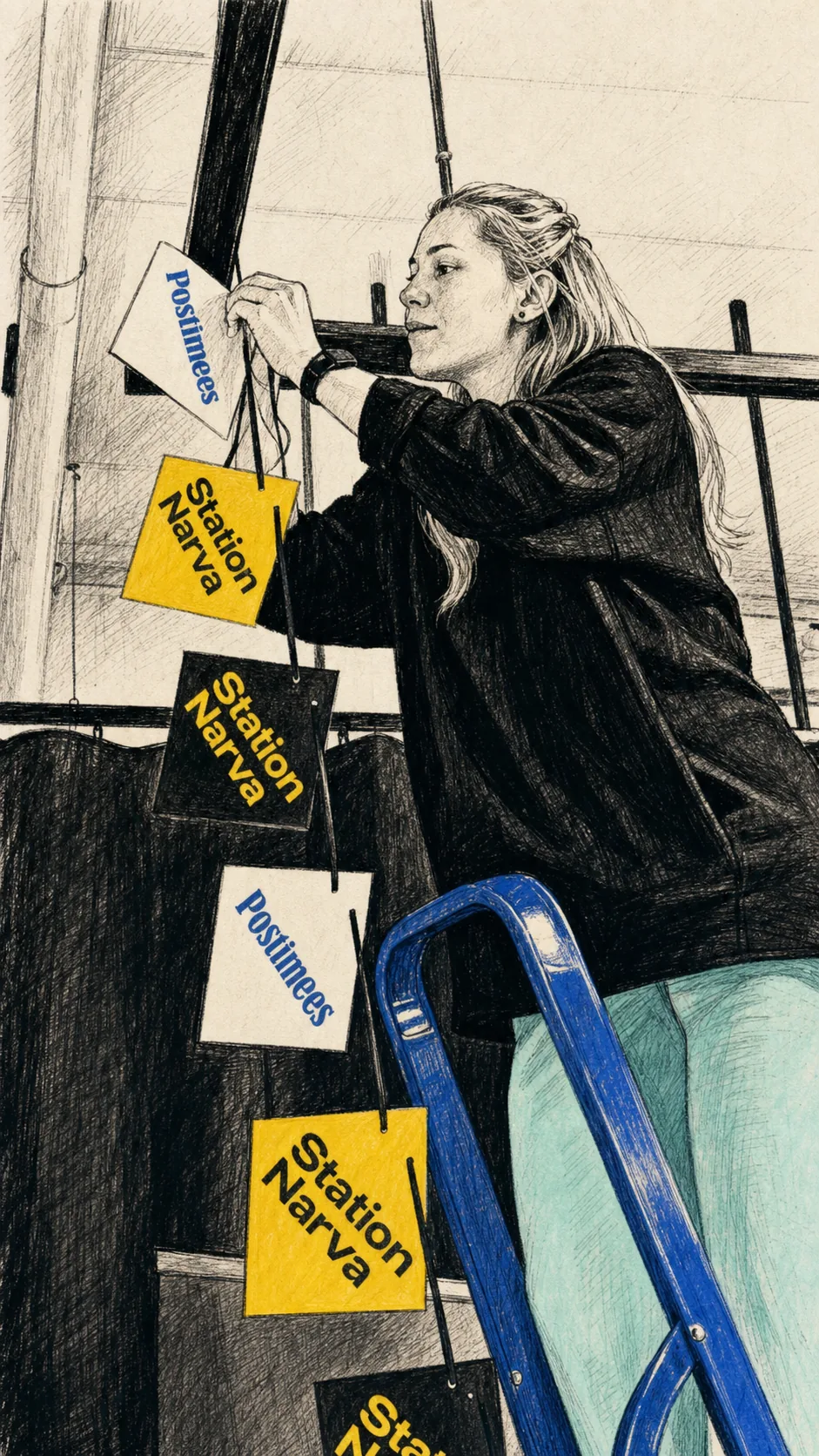
During the festival, work changes. We receive a list of sites and a schedule, sit down as a team and decide who is going where, what they are bringing, and where they are hanging everything. From the outside it looks simple: hang the flags. In practice, they can keep you busy for days.
Car with open trunk
Lelik Ivanov: Alena, have you been doing the design all the time?
Alena: One year I had a different task - a runner. At first I kept calling the role a “rider” because the word is funny. A runner is a person who can be called at any moment and told: take someone there or urgently bring something here. All three days of the festival you live with your phone and you understand that now you will run to save the situation again.
Once we had to transport tables and benches from one site to another, but there was no minibus. There was no time to wait. I have an ordinary passenger car, but I said: “Now we’ll do everything, don’t worry.” Another volunteer and I folded down all the seats, even took the front passenger seat, loaded the car to the limit and drove off with the trunk open. But they arrived on time.
Lelik Ivanov: Why is there so much work around flags? They are only needed for beauty.
Anya: Not only that. During the festival, many different places need to be decorated quickly and in a coordinated manner. It is important that the name of the festival is visible in photographs from different angles: this is necessary for sponsors and for reporting purposes.
A first-time volunteer may be extremely diligent without yet knowing what we check. Where will the flag sit in the frame? What may it cover, and what must remain visible? How do you fasten the tape so that it stays put? Alena is my right hand here. She has a car, knows all the important details and can take over from me when necessary.
Once upon a time, Vanya Sergeev and I were hammering signposts in the castle in the evening in the heavy rain. Vanya was then one of the key people in the local team after Helen Sildna, the founder and head of Station Narva. We even put arrows to the toilets. This is what a festival is: first you do advertising, then you stand in the rain and fasten a sign to a cube. One job just gave way to another.
Alena: I have an excellent student complex: everything must be done correctly. If you tie the flags, no ends should stick out. But if you cut it too short, the knot may come undone. Sometimes we're almost gone, but I still look back at this tape.
You need to do it carefully, but don't go crazy over every loose end. Nobody will see it at a big festival anyway. Except me.
When everything happens at the same time
Lelik Ivanov: Is a festival always a disaster?
Anya: A festival of this magnitude is a long-term disaster. Not in a bad way. It’s just that for a few days everything happens at the same time, and people still have an ordinary life: someone works, someone studies, someone can only come for a couple of hours. From this you need to assemble a schedule without holes.
In recent years, there have been even too many volunteers. We insure ourselves, we are afraid that we won’t be able to do anything, we recruit people - and suddenly it turns out that someone has nothing to do.
Alena: The festival itself officially lasts for several days, but there may be a conference, receptions and other events nearby. For the team, everything starts earlier and ends later.
After the festival there is a party for the team. In all the years, I seem to have stayed on it once. Usually by this moment I’m already dying and can’t go anywhere.
Lelik Ivanov: Why then do people volunteer?
Anya: When we were younger, you simply joined in. Completely different people met there, everyone mixed together, and you wanted to get into it.
Nowadays they often ask: “What will I get for this? Will they give you a ticket? There are still a lot of people who want to go, and they usually give a pass. But there is almost no time to use it: during the festival you work.
Alena: When I came to sign up with Olga Tapner, who recruits and distributes volunteers, there were about a hundred people on the list. Then these people are assembled into a schedule almost like a puzzle. One can only come for two hours, the other is free all day.
Anya: I like to recruit people into my team who are free on all festival days. Then we work with one team, no one needs to be retrained each time, and we manage to close all the sites.
Castle, Krenholm and cottages
Lelik Ivanov: Which site is closest to you?
Anya: In terms of atmosphere, Krenholm remains my favorite. The site turned out to be very expensive: there was no water or electricity, everything had to be brought. But the atmosphere was incredible.
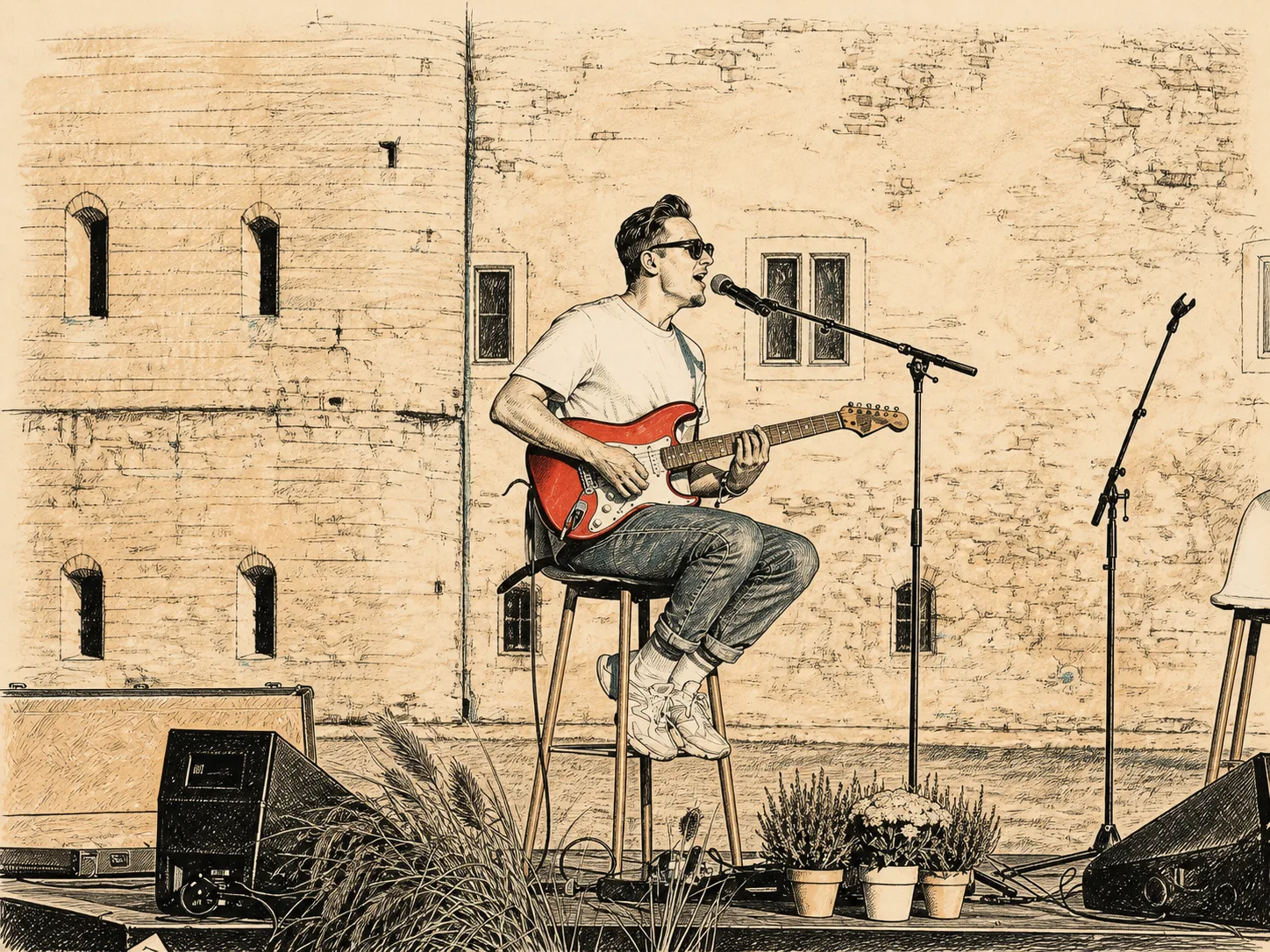
The castle has its own strength. This is the calling card of Narva and, probably, the whole of Ida-Viru County. There is already modern infrastructure, many separate points, space for food trucks and several stages. The castle itself does not seem huge, but it is almost ideally designed for a large festival. And everything is nearby.
Alena: For guests of the city, the castle is the first iconic place. Narvitians are also accustomed to big city events taking place there. When Midsummer Night was moved to Äkkeküla, the habit broke a little. Perhaps the new site is more convenient for the holiday itself, but I still remember the huge bonfire near the castle.
Anya: The festival managed to visit different places. There were Krenholm, a castle, Ro-Ro and dachas in the Kulgu area - Narva Venice. In 2022, Tallinn Music Week took place simultaneously in Tallinn and Narva, and the main stage program on Krenholm was presented by Station Narva. That’s why we ourselves sometimes argue about what kind of festival it was: the teams and people are largely the same.
For the best volunteer
Lelik Ivanov: What remains in your memory after eight festivals?
Alena: There are many funny stories. One day there was an excursion and a free concert at the dachas. The other volunteers and I set up a large tent and equipment in advance, but by the end we were left alone with the sound man. He had to collect wires, speakers and suitcases with equipment, load everything into a minibus, take it to another site and return. He called his guys and said: “I’m here, and next to me there’s only a fragile girl.”
I answered: “Don’t worry, we’ll do everything now.” He looked at me and said, “No.”
I asked what needed packing. He pointed to the cables. I started coiling them, and he looked surprised: “Have you done this before?” I said, “No, I used to live with an electrician. It’s fine.”
Then I started carrying speakers and heavy equipment cases to the van. His eyes widened. He told me to put everything down; I said: “Come on, let’s load it. I’ll get you to the castle quickly, without the satnav.”
On the way out, he slightly touched a wall or pole with his new minibus and was very worried about the scratched bumper. But I arrived on time and managed to adjust the sound. Then he found me in the crowd and handed me a chocolate bar: “To the best volunteer.”
And another year, Anya and I decorated a high hall for video filming in the Linda 2 complex, between Vaba Lava and the OBJEKT center. We climbed around near the ceiling and only came out around two in the morning.
Anya: Recently I asked a friend who was volunteering at Opera Days: “Would you like to help me at Station Narva?” She asked: “What, we just need to hang the flags?”
Sounds really easy.
It's just that sometimes these flags have to be hung until two o'clock in the morning, in the rain, between the castle, the dachas and Krenholm. And in the morning you need to see if they got into the frame.