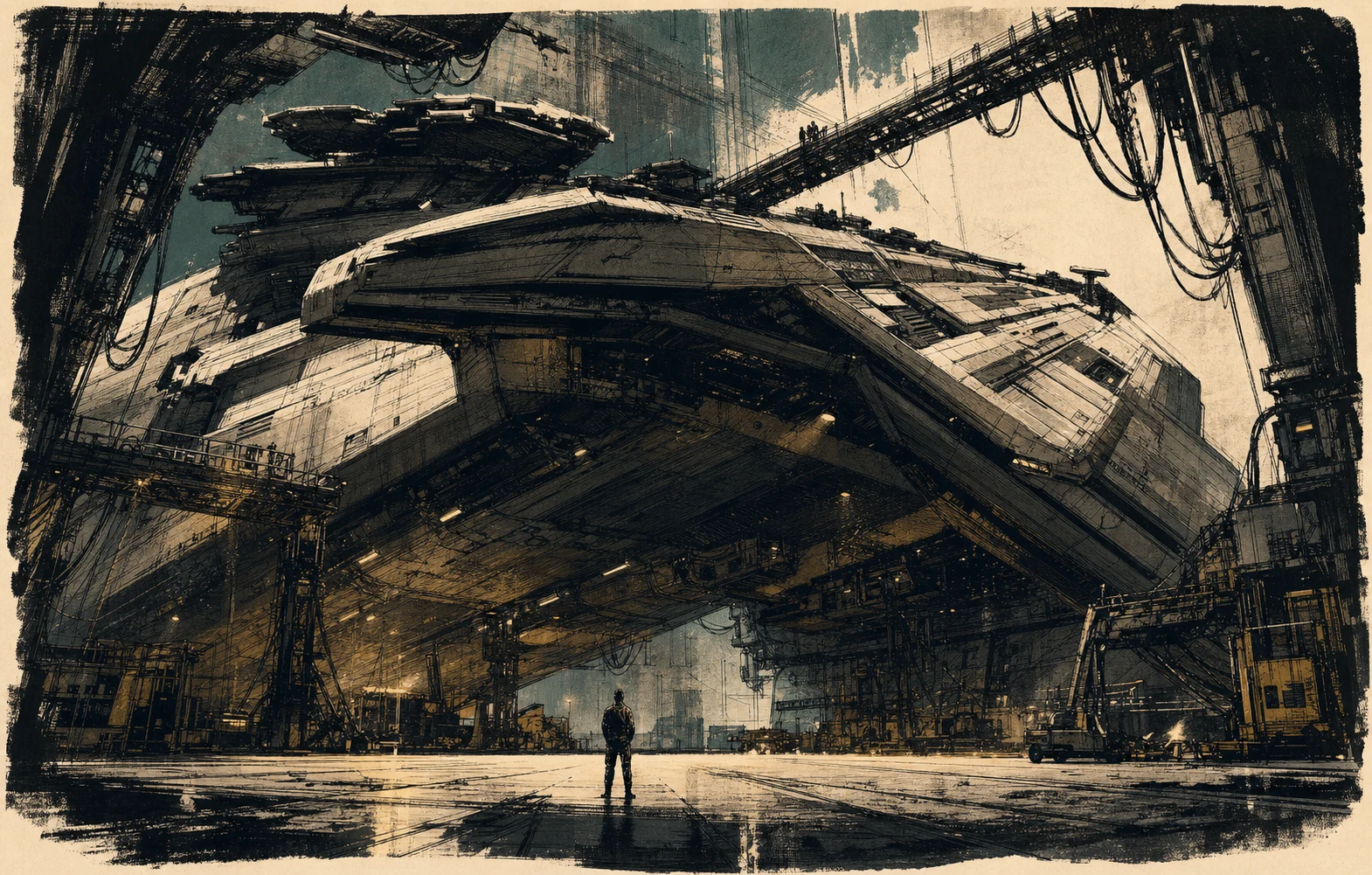

Star Citizen is a multiplayer space simulator for computers. The authors want to build a permanent universe where the player does not select a mission from a menu, but lives inside his own space life: he wakes up in a residential module, gets dressed, rides a train to the spaceport, calls a ship, climbs on board and takes the car out of the atmosphere himself.
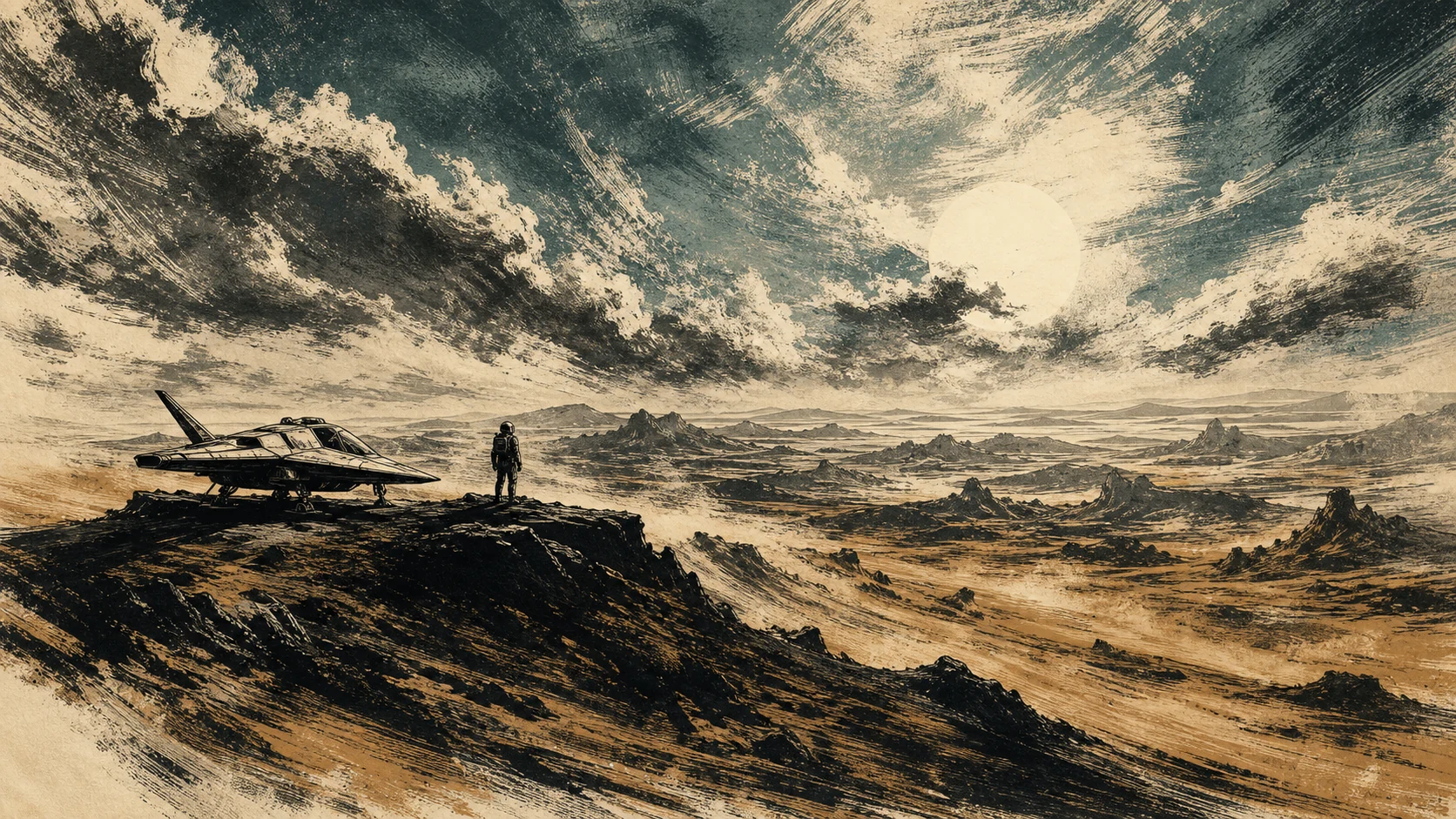
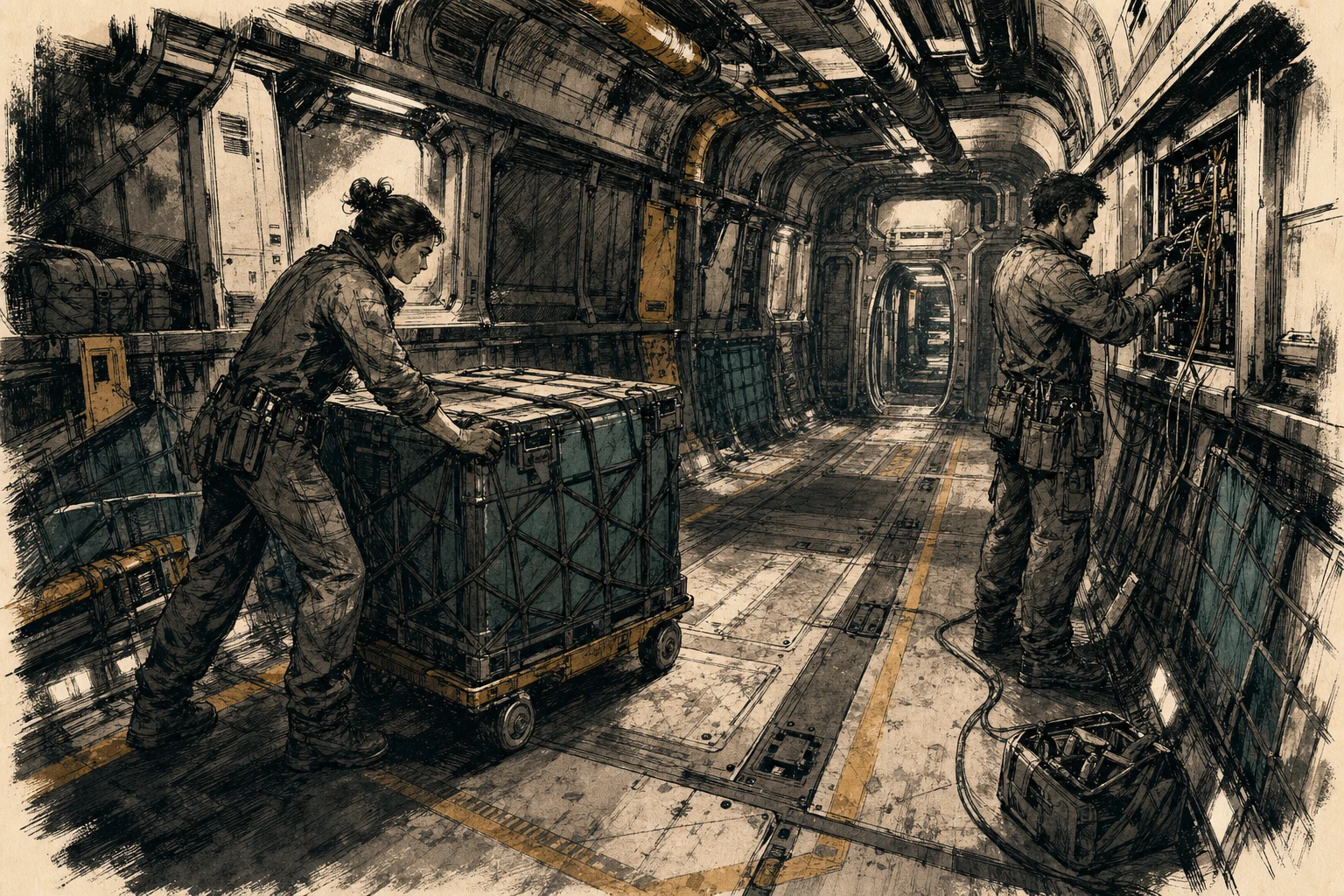
In an ideal Star Citizen, there is no editing between these actions. You can leave the city, fly through the system, enter the atmosphere of another planet and land the ship on a rocky plateau. The game already involves trading, mining ore, transporting cargo, hunting for criminals, rescuing pilots, dismantling ship wrecks, and shooting - from ship cannons and conventional weapons. A large ship is controlled by a crew: one person drives it, another sits in the turret, a third monitors the cargo or tries to understand why the door is jammed again.
At least this is what it looks like when the game is running.
Star Citizen is still in alpha. This is not a cautious label like “we are still polishing the balance”, but a direct warning: this is an unfinished test assembly. Missions may not count, the elevator may not arrive, the terminal may stop responding, and physics may suddenly declare war on the human body. A major update could add an entire planetary system and at the same time teach the hangar not to give up the ship.
Access is sold through starter kits. The buyer receives the game and the first ship, and then can earn cars inside the world or buy them for real money. Small ships cost the same as a regular game, large ships cost hundreds of dollars, and collectible sets cost tens of thousands. These sales pay for the development.
Nearby there is Squadron 42 - a separate story campaign in the same universe, with Gary Oldman, Mark Hamill and Gillian Anderson. If Star Citizen promises an endless shared world, Squadron 42 should be a complete single-player story. For fourteen years, neither one nor the other completely worked out.
Space promised in 2012
Chris Roberts, the author of Wing Commander, introduced the project in 2012. On Kickstarter he asked for half a million dollars, collected more than two million and promised the first versions in 2014. During this time, the PlayStation 4 and PlayStation 5 came out, teenage buyers became parents, and some early community members died without ever seeing version 1.0.
By 2026, the project's revenues exceeded a billion dollars. Star Citizen is still called alpha, and there is no date for the full release of the shared universe. In the ordinary gaming industry, such a set of facts would already sound like an autopsy report. Here it serves as a monthly status report for a patient who gets up, goes to a show and sells another cruiser.
Important trouble: the game exists
The most convenient criticism of Star Citizen is this: there is no game, there is only a ship store. It is understandable, but has long been incorrect. You can spend dozens of hours in Star Citizen: transport cargo, lose it due to a server error, earn fuel again, get friends on board, get lost in a huge ship, come under fire and find that the rescue mission has become the main event of the week.
Sometimes it really feels like a game from the future. Sometimes the elevator kills the pilot before reaching the launch pad. These states do not follow each other according to the calendar. They can happen in one evening.
The Alpha 4.0 update introduced Pyro, the second star system available to players after the original Stanton. This is a scorched and almost lawless area with its own planets, stations and routes. At the same time, the developers launched server technology that should connect different parts of the universe. At the first stages, it made it possible to gather up to five hundred people in one world. Behind the heavy technical vocabulary there was a simple proof: another system has appeared, you can fly into it, land there and watch a new sunset.
This is how Star Citizen has survived: it regularly produces physical evidence. Not the final game, but a new piece of the future. This is not enough to close old promises, but it is enough to prevent faith from becoming a mere memory.
It is not surprising that on Reddit the project is sometimes called Workaround Citizen. To play confidently, it is not enough to understand space mechanics. You need to remember which elevator is dangerous today, where you can’t leave the box, which terminal you should press twice, and after which message it’s better to immediately restart the client.
Experienced pilots not only know the rules of the world. They know its current breakdowns. A beginner requires the emotional stamina of a tester and the patience of a cosmic monk. The same person can write in the evening that this is the best game of his life, and an hour later - that he will never play it again.
The paradox is that failure sometimes enhances the story. A routine delivery turns into a rescue operation; a missing ship forces you to ask for help; a broken door gathers five strangers at the gateway. Of course, this is a poor excuse for a mistake. But as human material, a mistake sometimes turns out to be more productive than a regular mission.
At the same time, Cloud Imperium Games turned the production of the game into a separate spectacle. Dev diaries, roadmaps, test servers, the annual CitizenCon, and hours of technology talk give the community a constant narrative. This series has its own heroes: Persistent Entity Streaming, Object Container Streaming, StarEngine and server meshing.
Each technology promises to remove another limitation. Items will finally remain where they were dropped. Servers will learn to transfer players to each other. Systems will become larger. The crews are more numerous. Instead of one huge promise, it turns out to be a ladder of technical steps. Some of the steps are real, some have been marked with chalk for years, but the gaze is always directed upward.
So the delay ceases to be emptiness. It is filled with demonstrations, disputes, tests and anticipation of the next patch. People no longer only monitor the product, but also the method of its manufacture. In most games, production is hidden from the public. Here he was made part of the performance.
The ship is like a membership card
Star Citizen's financial model is as important as its engine. Players buy starter kits, subscriptions, finished ships and unbuilt concepts. In 2023, the Legatus 2953 set with 175 ships was valued at $48,000. This is extreme, but it shows the structure of the store: a person pays not for a polygonal model, but for a future profession and position in the world that does not yet exist.
The truck promises a trading career. Rescue ship - the role of a space doctor. Research ship - not yet open systems. A large frigate requires a crew and creates a social hierarchy in advance: captain, pilots, gunners, engineers. The purchase becomes not only an expenditure, but also a statement of who one is going to be after the release.
According to Cloud Imperium Games' own financial report, in 2023 the company received $143 million and spent $163 million. There were 1,085 people on staff. This is not a garage team that has been drawing one beautiful door for twelve years. Here we have an expensive production machine dependent on the ability to sell the future again and again.
A third of life is waiting
One of the old Reddit members wrote on the tenth anniversary of his account that Star Citizen took up about a third of his life. He supported the game as a student when he built the first computer. Over ten years, work, interests and the very attitude towards games have changed. The former delight is no longer there, but it is still important for a person that the dream exists somewhere ahead. Now he would rather watch from the stands than take the field.
There is no advertising heat in this confession. You can hear nostalgia for the future there. Usually we yearn for the place we were. Star Citizen has taught people to yearn for a world they haven't yet reached. The project has become a calendar: a new ship marks one age, the next CitizenCon marks another, talking about the release of Squadron 42 brings back to who a person was when he heard this name for the first time.
Over the years of waiting, very real relationships emerged here. In the spring of 2025, a young player spoke on Reddit about an older friend nicknamed Romp. They met in Star Citizen. Romp taught him to fly, helped him understand the game, was interested in his studies and asked him to send him photos from his graduation. When the exams were over and the author returned to the game, he learned that the mentor had died. He described the loss as the death of his father.
This personal history cannot be verified from documents, but it is easy to recognize from the structure of the community. In the discussion, players suggested making a memorial for those who did not wait for version 1.0. Others remembered their own friends, organized farewell flights and left names on ships.
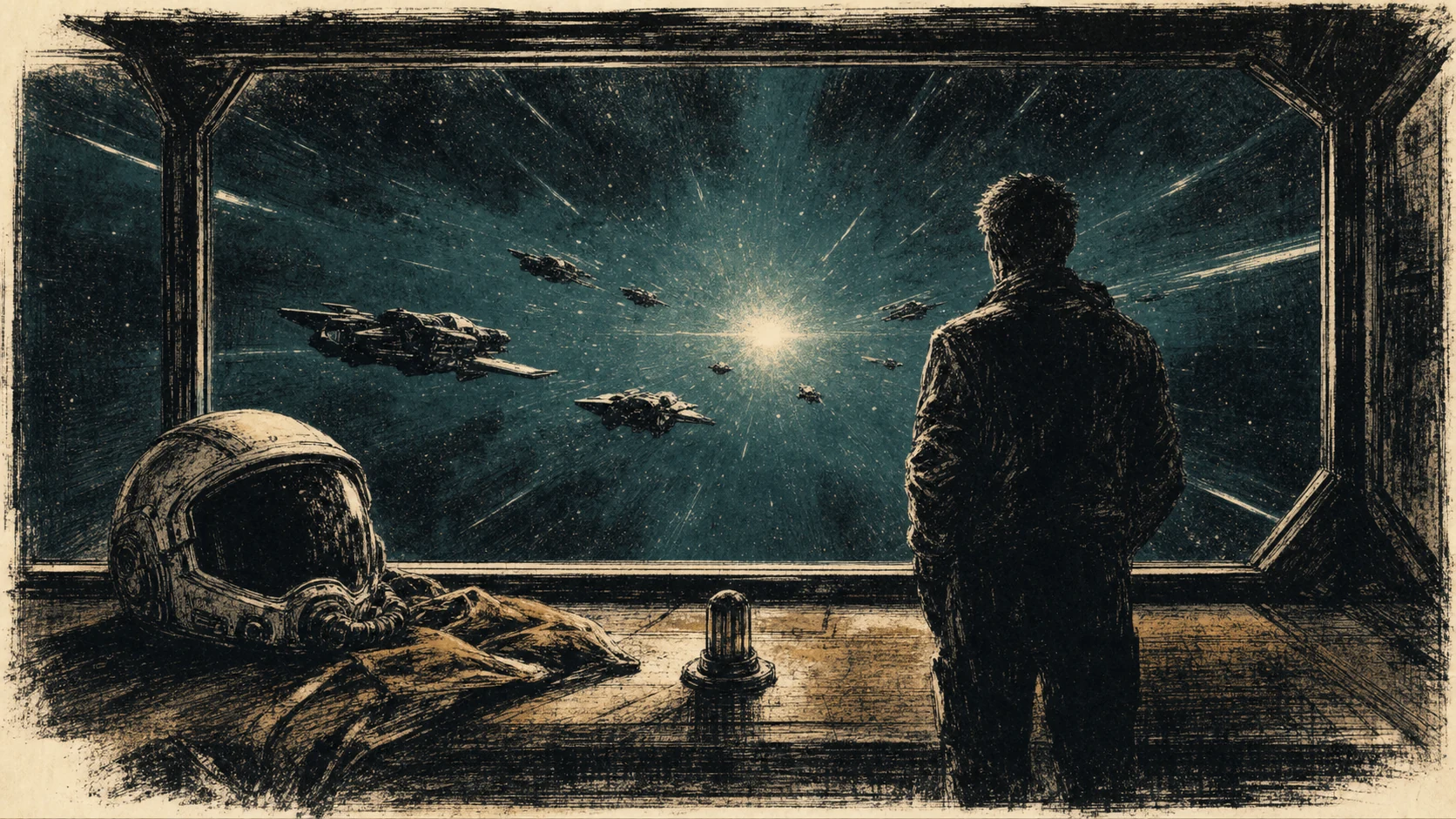
Players themselves organize races, exercises, search operations, ship exhibitions and funerals. The developer gave them an unfinished space and they turned it into a meeting place. Hence the main answer to the question why the project did not die: part of the promised universe already exists, only it is built not from planets, but from relationships.
There is another edge to this attachment. In 2026, one of the community members said that he had supported the game since 2015, spent about 25 thousand dollars, received Legatus status, then left for a long time and decided to sell the collection. He emphasized that he spent his free money and did not go broke. But his best memories were associated not with official assignments - they were too often broken - but with the events of his organization.
The history of Star Citizen can conveniently be explained by the “sunk cost fallacy”: once a person has invested money and years, it is psychologically difficult for him to leave. This is part of the answer, but not the whole answer. Failed projects also receive money and then disappear. Star Citizen continues to give participants new reasons to stay: technology, a ship, a meeting, an argument, another attempt at an evening like nowhere else.
Why is he still alive
First of all, Star Citizen doesn't have a direct replacement. Elite Dangerous offers a huge galaxy and flight. No Man's Sky - Planets and Exploration. X4 - space economy. EVE Online - politics and alliances. Each game delivers on part of the promise, but none attempts to deliver seamless landings, a physical ship, multi-crew, terrestrial life, economics, and space opera scale all at the same time.
Secondly, the project is still moving. Slowly, unevenly, sometimes towards the nearest wall, but new systems and mechanics appear. A person who himself walked from the cabin to the bridge, took the ship out of the hangar, left the atmosphere and landed on another planet receives strong personal proof. Memes about the eternal long-term construction do not cancel what we saw.
Third, external criticism strengthens internal community. Players learn to distinguish between a legitimate question about timing and a common joke about cheating. The more roughly the project is described from the outside, the easier it is for the participant to feel like a person who knows the complex truth from the inside. Star Citizen has developed a monopoly on its own promise—and the specific language used to defend that promise.
Squadron 42 will be a separate test for this entire system: Cloud Imperium Games will have to show not just another stage, but a finished product. The company is targeting 2026, but there is no firm date yet. An all-star cast and years of development raise the stakes: a good campaign can retroactively make sense of part of a huge journey. A bad one will strike at the main right of the project - to say that the greatest is yet to come.
While Star Citizen remained in alpha, the answer to any complaint was that it was a work in progress. The completed Squadron 42 will no longer have such an excuse.
Life before version 1.0
Over fourteen years, Star Citizen has become a public institution with its own economy, holidays, classes, veterans, dissenters, technical language and memorable dates. It is fair to criticize him for the timing, for selling expensive ships and for the gap between the promise and the daily work of the alpha. But to reduce everyone involved to duped customers is to ignore the life that has grown around the missing release.
People bought an unfinished game. Around it grew fully formed friendships, quarrels, habits and memories. That is why Star Citizen is still alive. Perhaps, for that part of its life, it no longer needs a release.
- The history of the Kickstarter campaign in Wired review
- Billion dollar data and project status
- Official description of Alpha 4.0 and Pyro
- Cloud Imperium Games financial report for 2023
- Letter from an executive on the status of Star Citizen and Squadron 42
- Reddit: ten years of account
- Reddit: Romp history and memorial idea
- Reddit: a participant's story about 25 thousand dollars
- Reddit: State of the Game in 2026
- Reddit: Workarounds and Entry Threshold