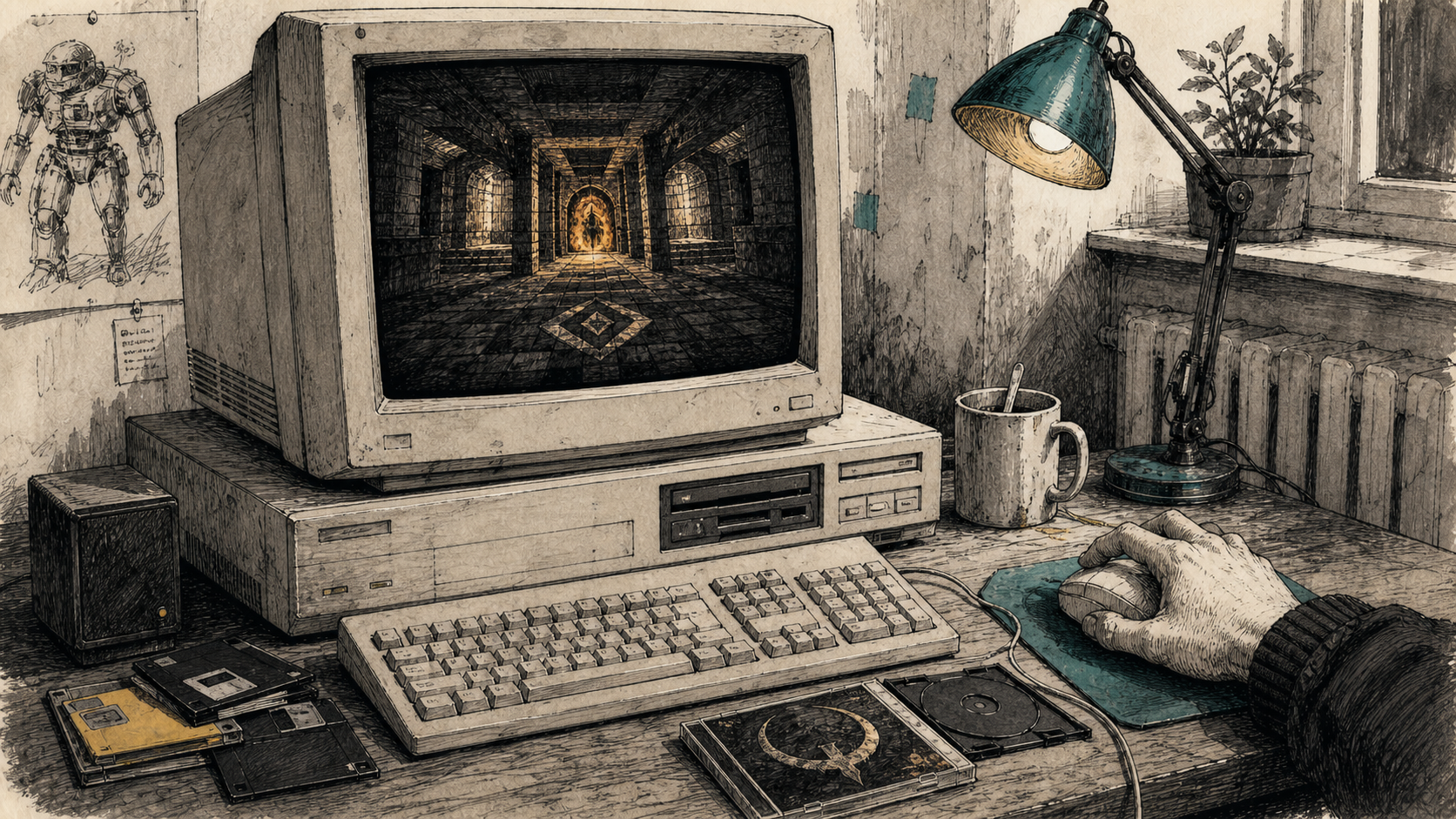

Quake came out in 1996, and the home computer found a new way to look at its owner with contempt.
On the box it looked almost decent: Pentium 75, eight megabytes of memory for DOS, sixteen for Windows 95, VGA, some disk space, Sound Blaster, CD-ROM not from a museum. This is a normal list. That reads less like a requirement than a clinic questionnaire.
Quake didn't run on a computer at first. Quake ran on your self-esteem.
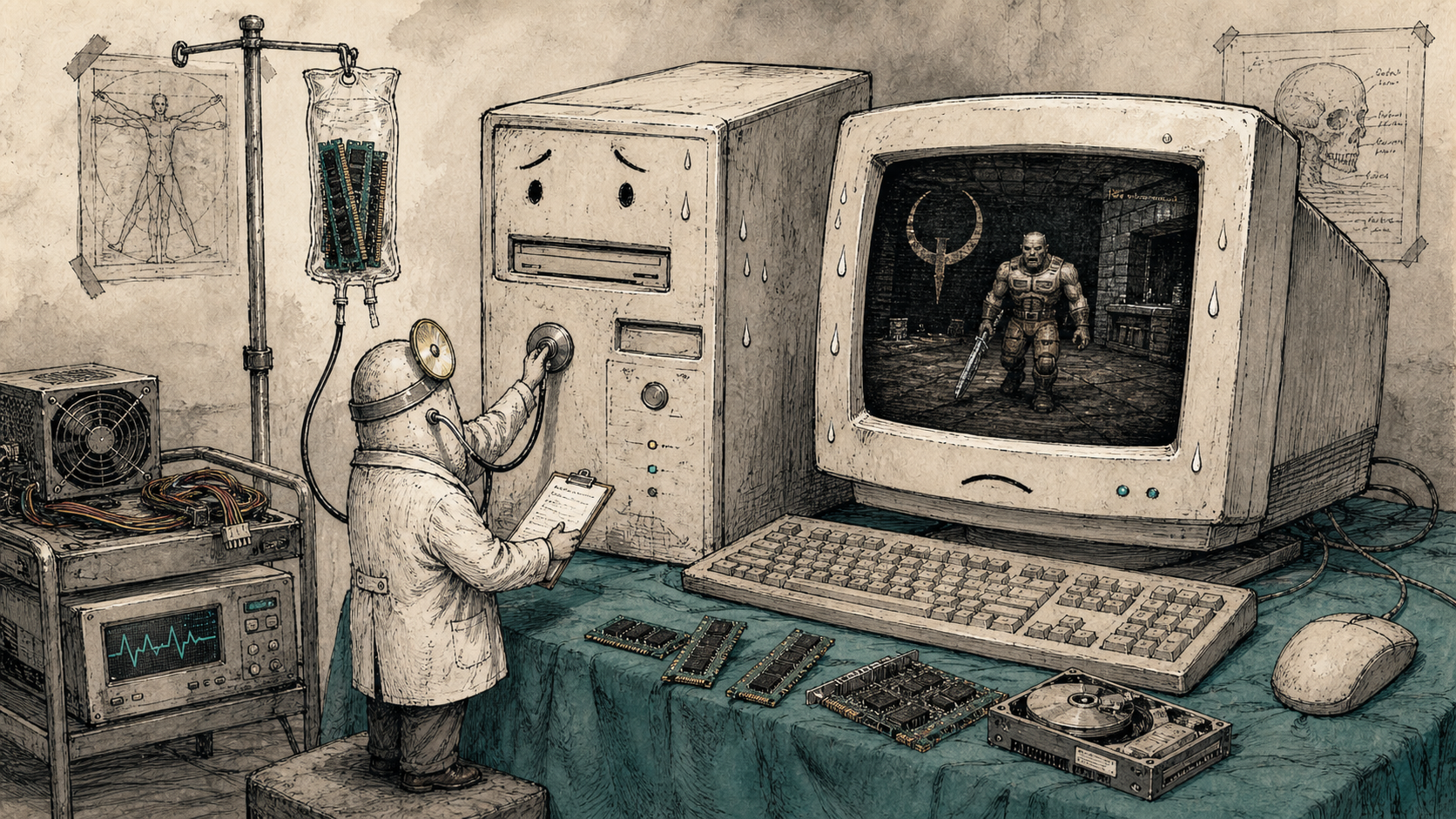
But in life everything was different. You thought you had a car. The game answered: we'll see.
Before this, there was already Doom: corridors, a shotgun, speed and a great feeling that the screen will become part of your nervous system. But Quake didn't come as a sequel. It arrived like a cold entrance after renovation: the wall seemed to be in place, the light bulb seemed to be on, but for some reason entering already felt unpleasant.
The main thing was not that it became darker. And not even that it has become more voluminous. The main thing was that space ceased to represent space. It began to be.
You didn't pass the level. You went inside. And no one was waiting for you inside.
Disk, iron and alien air
The old Russian game writer knew one important thing, which was later almost lost: he wrote about the game as if the reader would now actually go to launch it. Not “within the genre,” not “against the backdrop of industry development,” but plainly: I installed it, loaded it, went into the settings and realized that the computer was looking at you like a cashier at the end of a shift.
Quake was that sort of game. It demanded attention and respect for the hardware. The game could be a revelation, or it could become a slideshow in brown hell. This was also part of the magic. They sold more than the world. They sold you a reason to find out what your box under the table is capable of.
id Software did not make another shooter. It built a machine that everyone then got into: from online maniacs to people who found themselves building maps at three in the morning. Nobody called that beautiful then. Back then the line was: “It runs? Wow.”
Plot as a respectful formality
Quake’s plot takes little time to retell. The base is under attack. The operation failed. Slipgate is open somewhere in the wrong direction. Ahead: an alien dimension and a bad boss for the whole party.
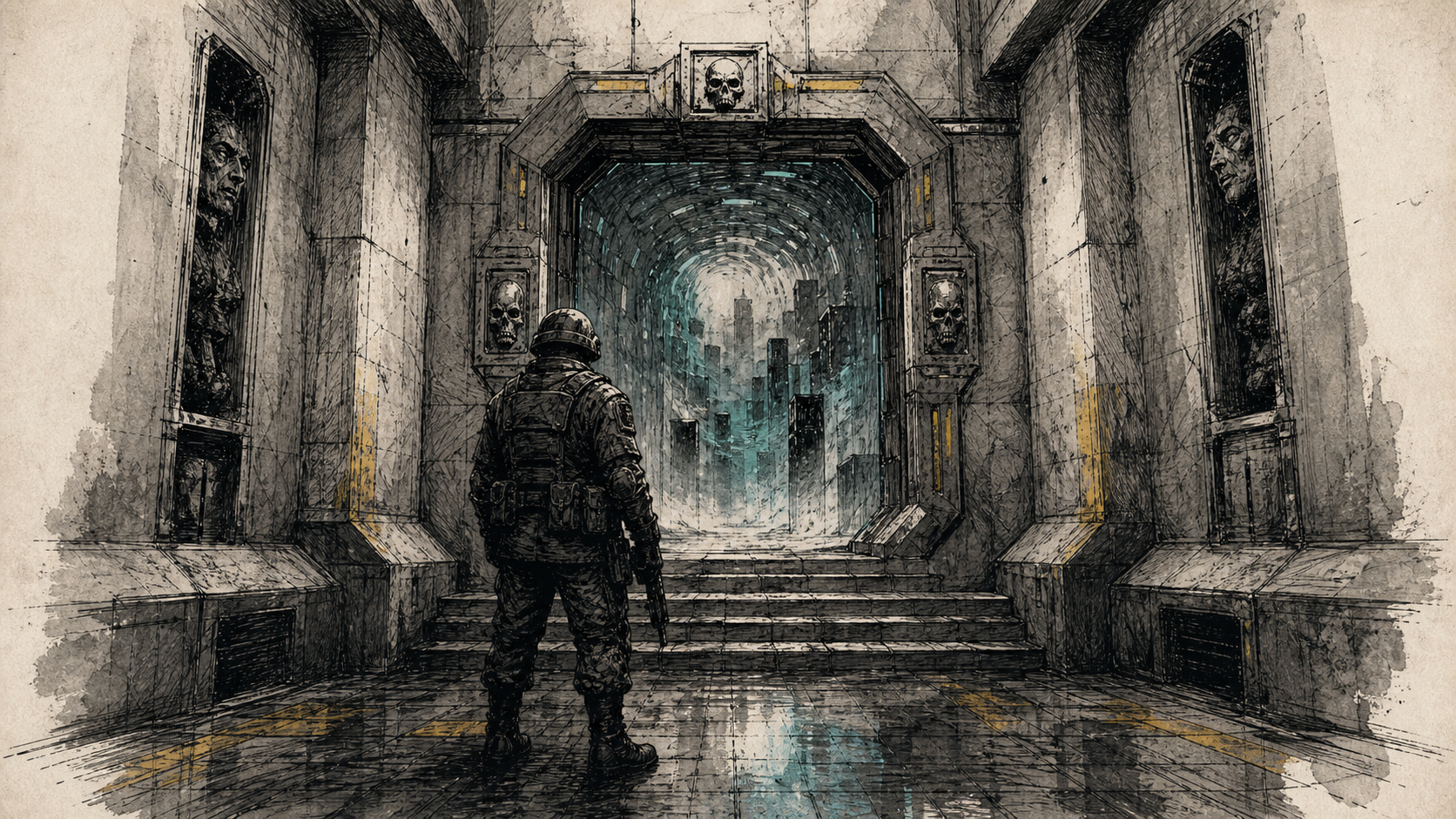
But Quake was not a game putting on a literary face. It did not sit you in a chair, open a lore folder and say: “Now we’ll explain the motivation behind the portal.” It spoke plainly: here are the weapons, here is the door, it is bad in there.
Quake doesn't pretend to be a novel. It works by temperature.
The stone is wet. The metal is cold. The elevator is noisy. The light is lying. Something is breathing somewhere nearby, but there is no need to pretend that you know each other.
Music that settled in the walls
Trent Reznor and Chris Vrenna of Nine Inch Nails made the soundtrack. And this is not a case where someone glued a famous name to the box to sell better.
Quake's music doesn't sound like music at all in the traditional gaming sense. It does not encourage. It does not lead. It does not announce a "dynamic section". It moved into the walls.
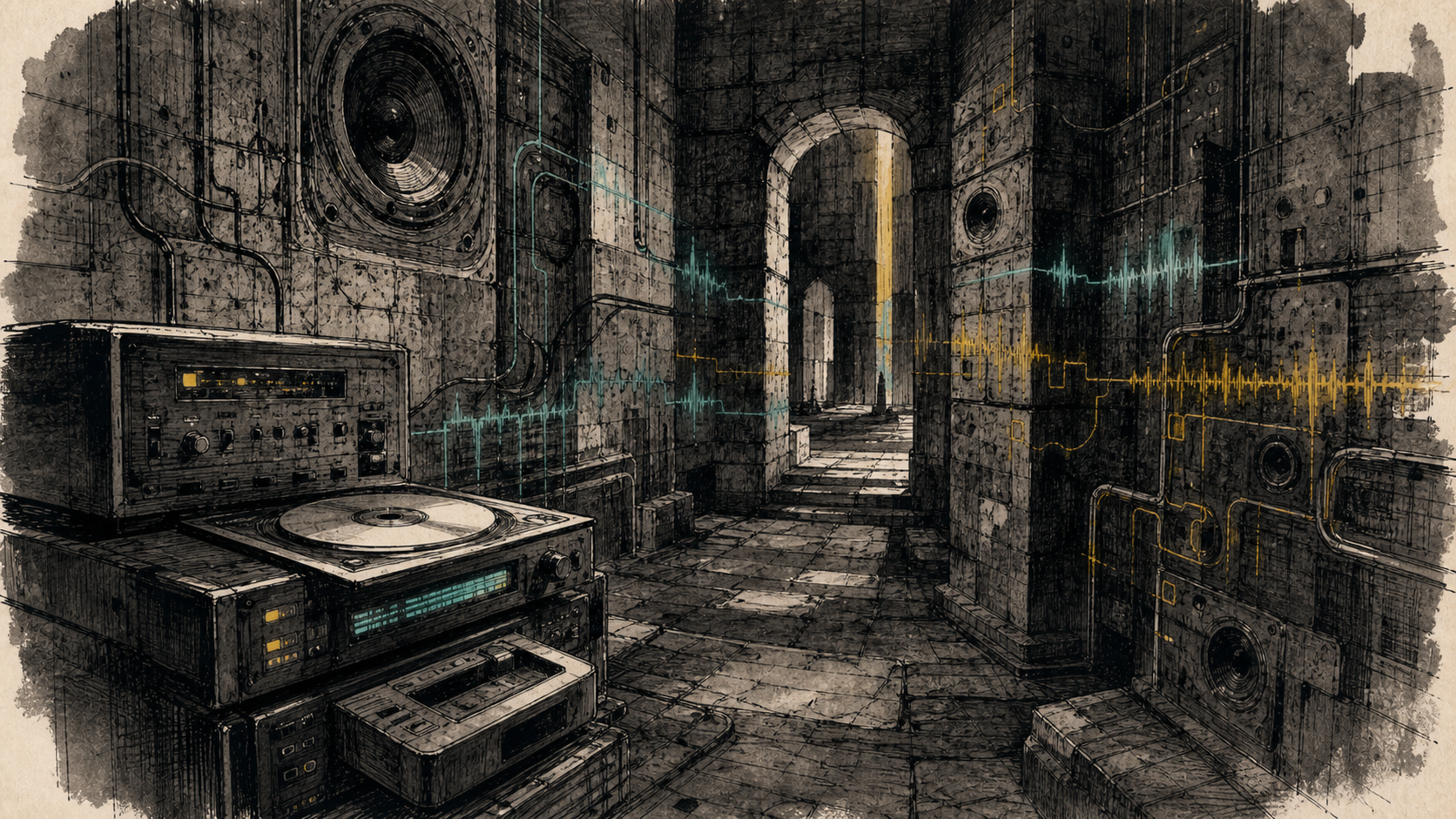
Noise. Hum. Iron. Air nobody has ventilated for a long time. The electricity is somewhere behind the panel. It’s as if it’s not the soundtrack playing, but the level itself rotting from the inside.
In old magazines they liked to write that a good game has “atmosphere”. That often meant the author liked the fog. In Quake, the atmosphere was not foggy. It was the neighbour behind the wall, moving furniture at four in the morning when you know the flat is empty.
The music does not lead you by the hand. It stands nearby and pretends those are not its footsteps behind you.
And here you go. You listen to the door. Listening to the elevator. Listen to your weapon. Then you hear it.
Shambler
The Shambler appears without ceremony.
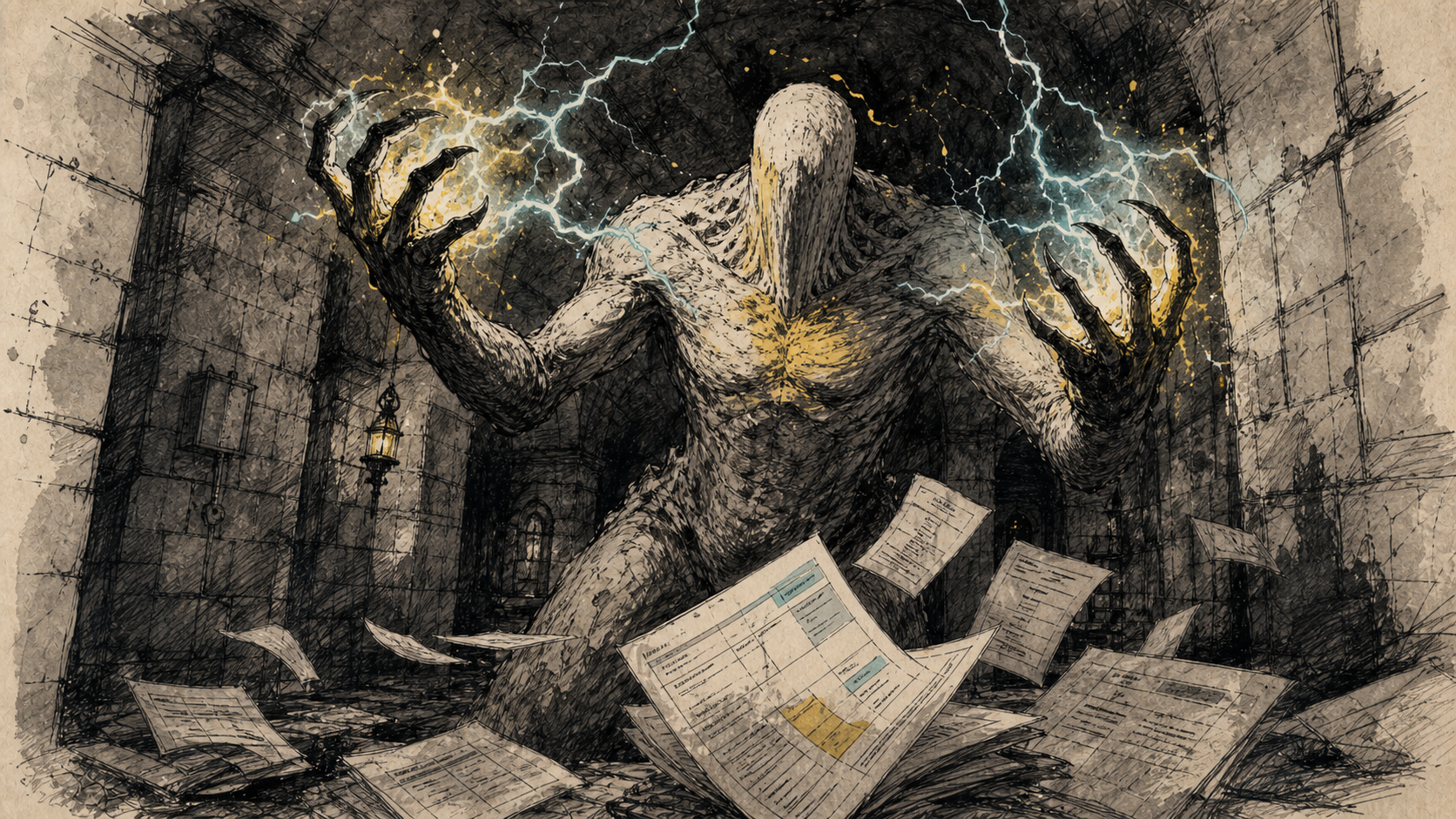
Not like a boss with a separate scene. Not as a “dear player, an important creature is about to come” attraction. He is simply there. A large white carcass without eyes. Mouth. Claws. The gait of a creature that is in no hurry because it already knows the outcome.
At first he's even a little funny. Somewhere between Bigfoot, the meat locker and a bad costume for a children's party in hell. Then he raises his paws. And everything becomes adult.
Shambler is not scary because of his appearance. Shambler has terrible behavior.
He doesn't fuss. He does not ask you to join a beautiful scene. He closes the distance. It hits with electricity. It breaks your confidence that you already understand the rules.
He doesn't have the eyes to reason with him. He knows where you are.
Play without a care
A modern game often approaches the player like the administrator of a good hotel. Here's a hint for you. There's a marker here. Here's a plot line. Here we will scare you politely, but first we will make sure that you are looking in the right direction.
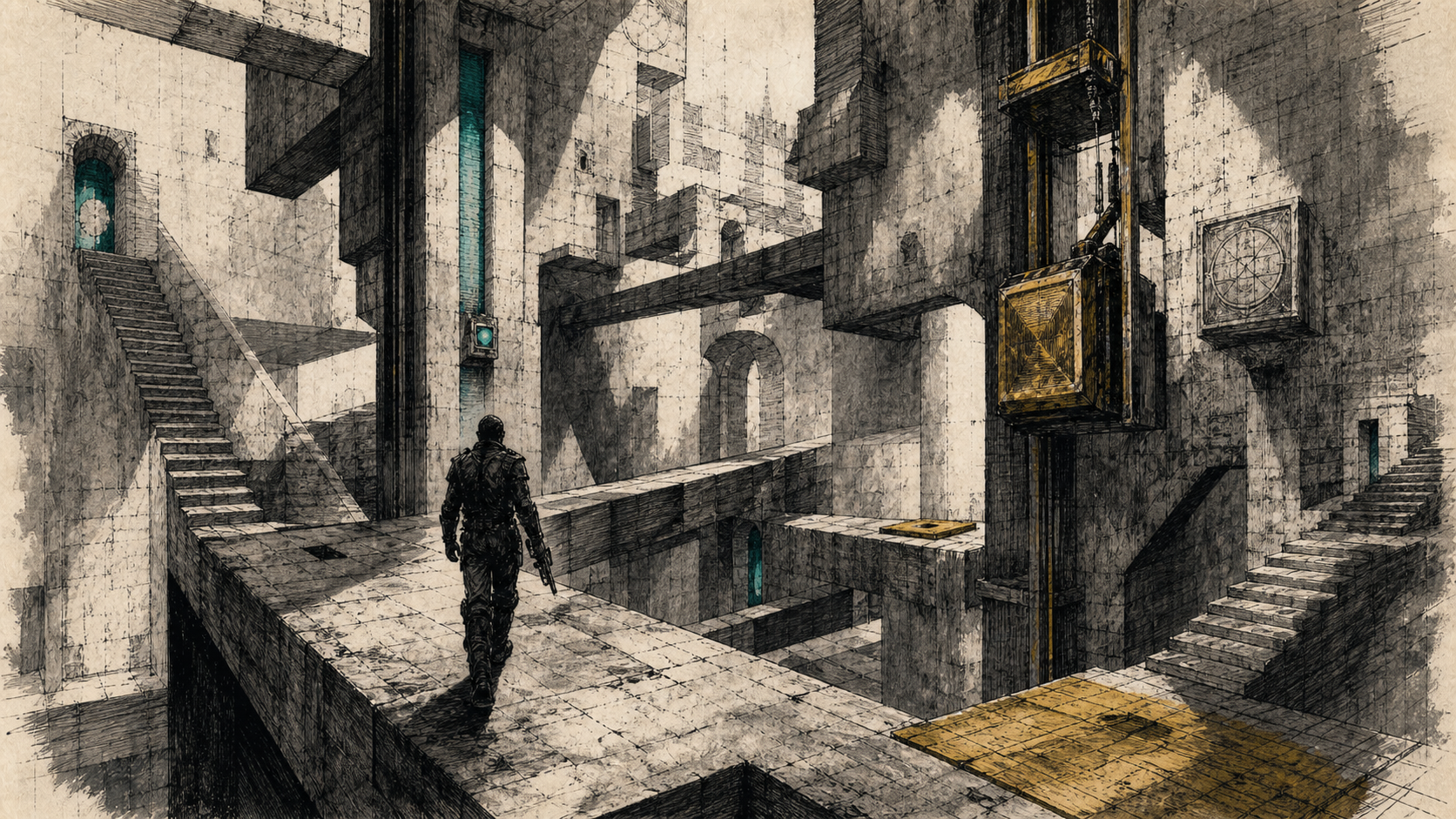
Quake wasn't like that. Quake said: the door is there. From here, you are on your own.
This was his philosophy. Not to explain the world, but to launch it. Not to tell you how to be afraid, but to give bad light and a place where a mistake becomes your personal biography.
You backed away. Missed. He was clinging to the step. I was looking for a first aid kit. I remembered that there was no first aid kit. Shot with the wrong thing. Dying. Loading. He went there again, this time with the air of a man who understood everything and now again cannot do anything.
This is the real school. No textbook. With Shambler instead of the head teacher.
Why is it still alive
Quake never ages like a neat classic under glass. It ages like something you found in a garage, wiped it with a rag and turned it on. It became louder than expected.
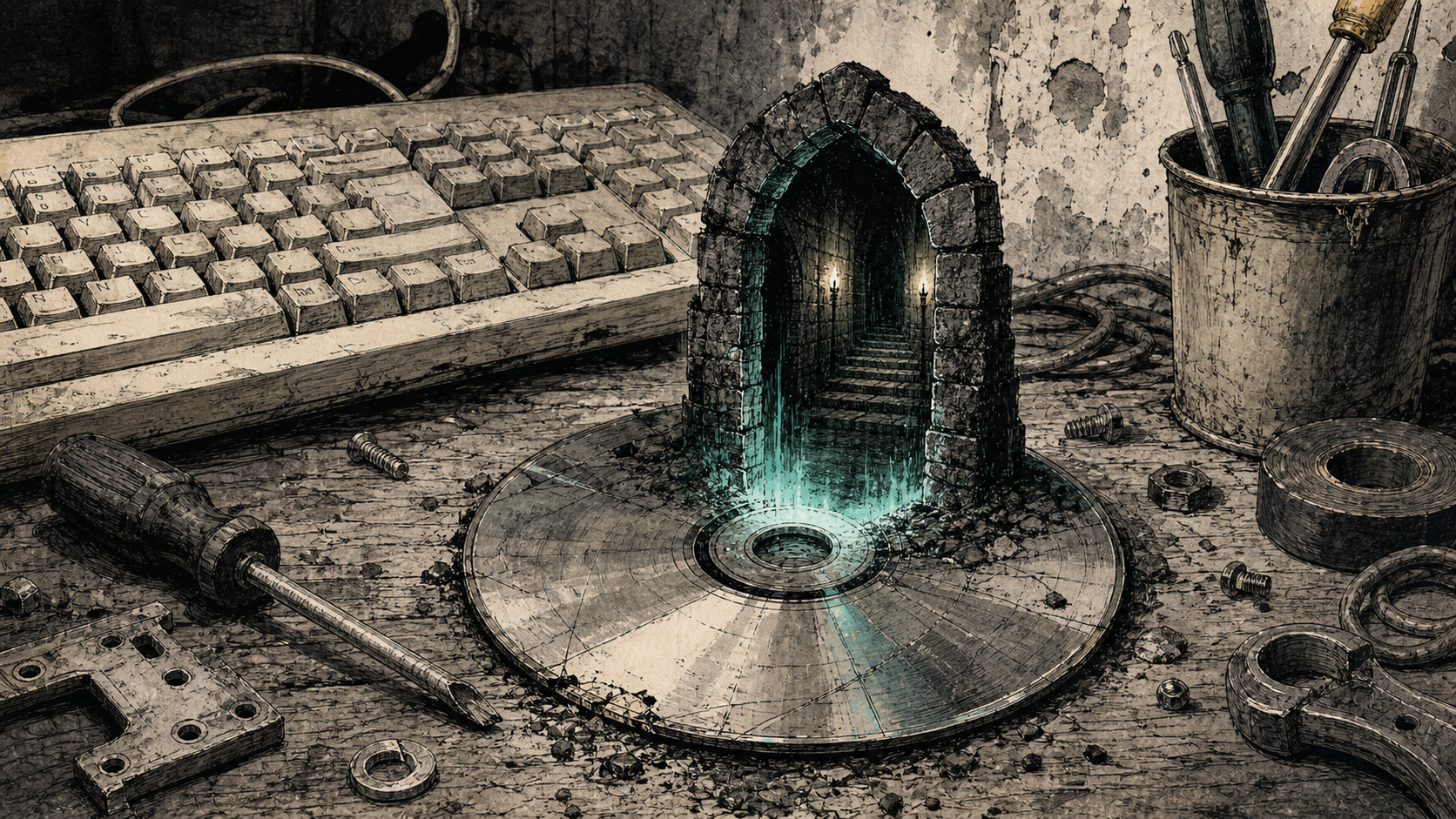
Yes, today you can see the seams. You can see the corners. You can see the technologies of its time holding the game together. But that is precisely why it does not look like a museum exhibit. It looks like a working tool. A drill for opening a portal.
Quake does not want to be liked. It does not pat the player on the head, apologise for the darkness, or put up a sign saying “caution, atmosphere ahead.” It opens the door.
And behind the door there is a level. And somewhere in the level there is a Shambler.
Narva morality, of course
That feels familiar.
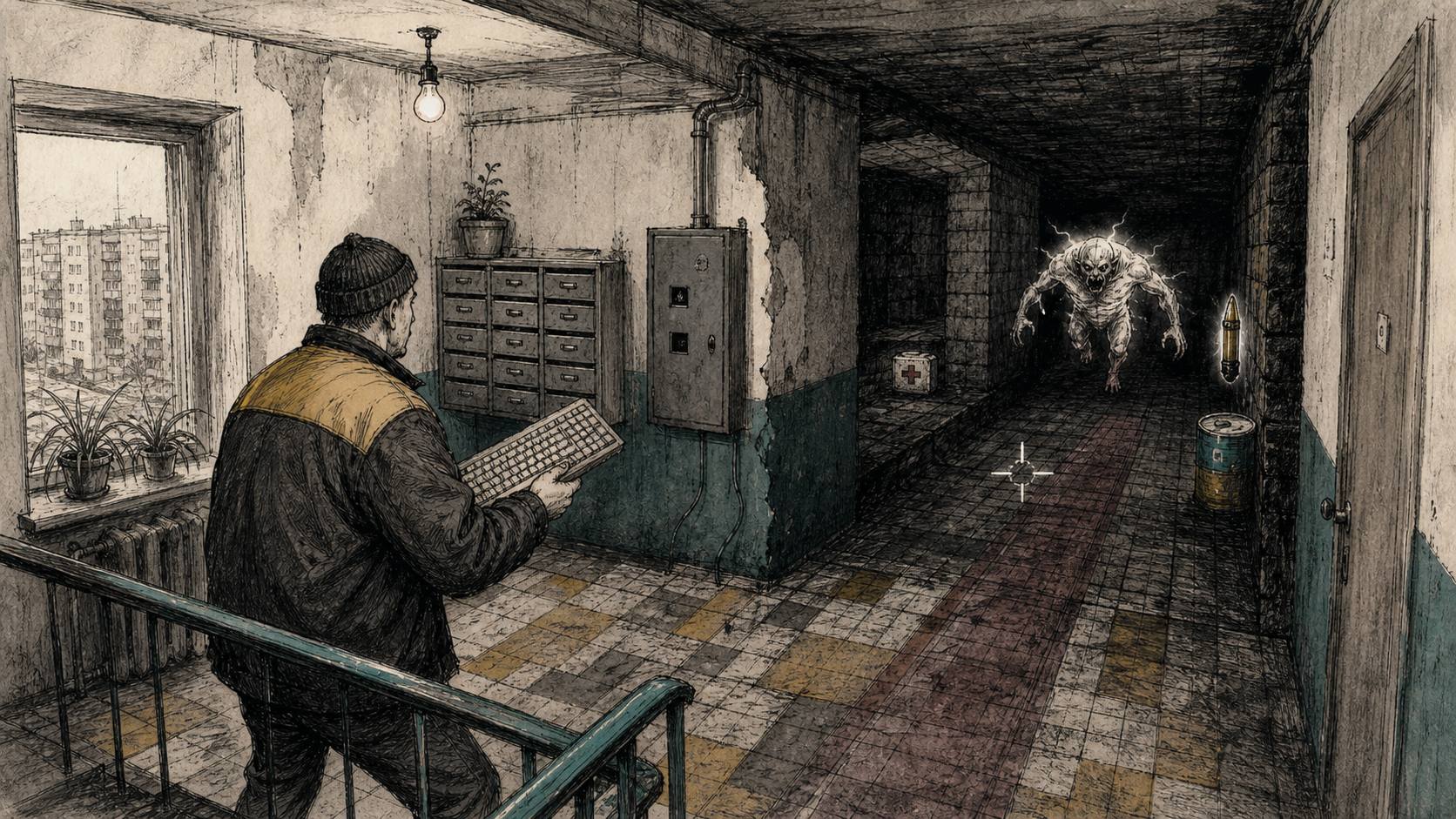
Sometimes the city also works like Quake. First they give you a corridor. Then the button. Then the door. Then it turns out that the door was in the wrong direction, the elevator left without you, and around the corner a Shambler waits in the form of a bill or a person saying “well, you understand.”
And you understand. You take the shotgun. You move on.