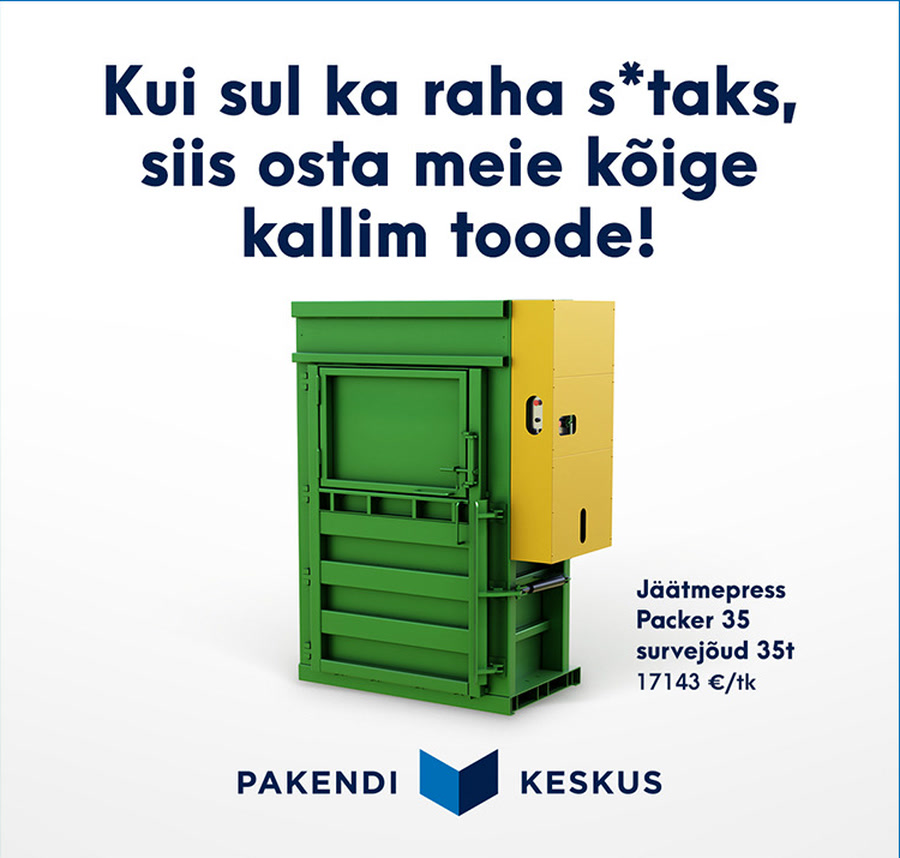

After advertising that requires explanation, it is useful to look at advertising that goes without explanation. It can also contain provocation, impudence and a joke on the edge. The difference is visible in what happens next: a bad provocation sends the viewer arguing about the author's intentions, a good one returns him to the product.
At Pakendikeskus, the product line sounds like a punishment for a copywriter: boxes, bags, film, tape, disposable tableware, packaging machines. The Tabasco company and agency turned this boring assortment into a useful creative constraint. Every joke must end with an item that actually lies in the warehouse.
Pakendikeskus: news arrives in the packaging department
The formula seems simple: take the news, find an item in the catalog with a suitable name or function, and publish it before the joke fizzles out. But in this simplicity there is discipline.
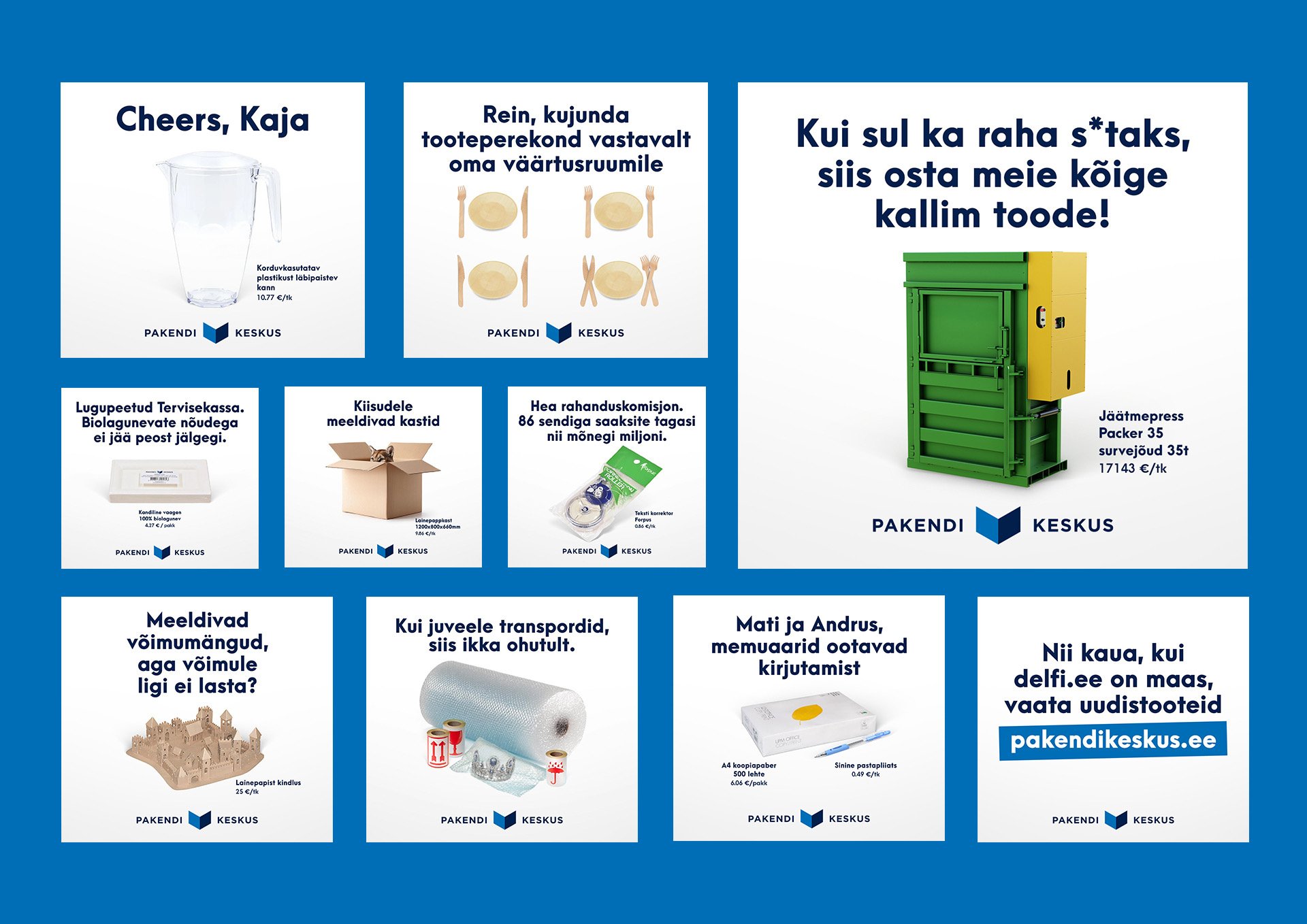
In the selection next to it there is a garbage compactor with the phrase «Kui sul ka raha s*taks, siis osta meie kõige kallim toode!» - “If you also have a lot of money, buy our most expensive product”; box with cat and signature «Kiisudele meeldivad kastid» - “Cats love boxes”; proofreader for 86 cents and an appeal to the parliamentary finance committee: «86 sendiga saaksite tagasi nii mõnegi miljoni» “For 86 cents you could get back more than a million.”
Jokes may require knowledge of the Estonian agenda, but the goods do not require footnotes. A press remains a press, a box remains a box, a proofreader remains a proofreader. The news gives an impulse, the subject puts an end to it.
This is more important than a “bold brand voice.” Pakendikeskus doesn't just comment on the feed on behalf of the blue logo. It proves the width of its own directory every time. The politician changes, the scandal is forgotten, and the viewer remembers an unpleasant fact: these people, it seems, sell everything.
“This is not the end”: when you had to joke about yourself
On May 23, 2023, the main Pakendikeskus warehouse caught fire. The fire destroyed the first three letters of the huge PAKENDIKESKUS sign, leaving the beginning of the word on the wall END. Less than an hour after the fire started, the company published a photo of the facade with a line THIS IS NOT THE END - “This is not the end.”
In regular advertising, a brand borrows someone else's news. Here he himself was the news. Therefore, the post worked not as a cheerful postcard on top of a disaster, but as a short message to employees, clients and the market: we see the same thing as you, but we are not going to close.
This Is Not The End - “This is not the end.” The punchline emerged from the surviving letters of the sign.
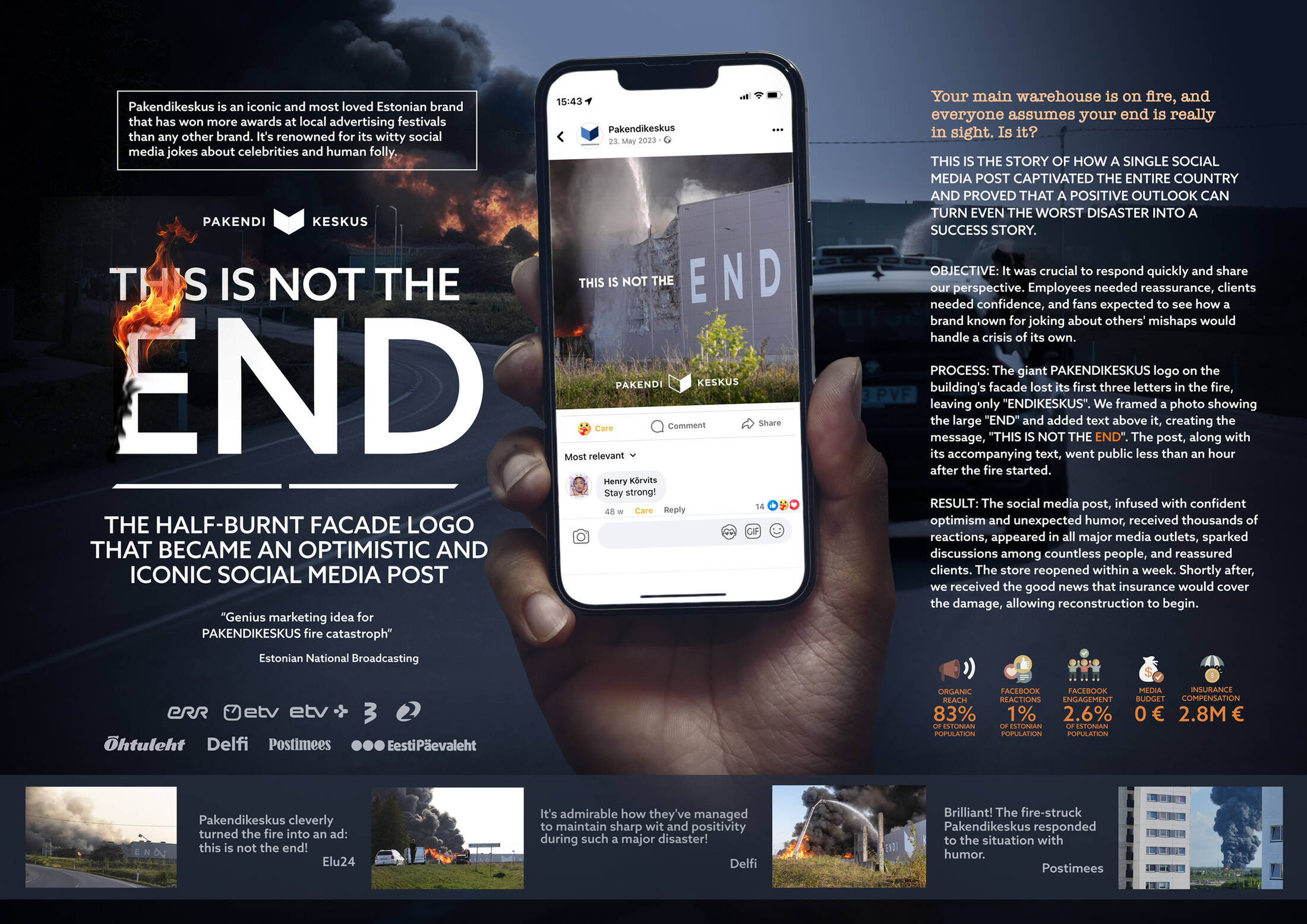
According to Tabasco's competition entry, without paid promotion, the publication reached an audience comparable to 83 percent of the Estonian population; The store reopened within a week. The figures are provided by the campaign team itself, so this is information from the competition application, and not an independent audit. But the result is visible even without fanfare: the burnt letters turned into a sign of stability that could not have been invented in advance.
Success is not equal to one successful meme.
Pakendikeskus' application for Kuldmuna for 2023 lists a Facebook reach of 797,280 people. Of these, 775,571 came without paid promotion: 97.3 percent. The posts collected 38,896 reactions and more than a hundred mentions in online publications; 27 percent of visitors came to the site directly.
- 97,3%the campaign spread on Facebook organically
- 38 896reactions recorded in the competition application
- 100+mentions in online media
- 10The brand received Kuldmuna awards in 2024, including Grand Prix
It’s important to remember where these numbers come from: brand and agency competition submissions. But here at least it is not abstract “noise” that is measured, but distribution without paid promotion, site traffic and repeatability of the result. In 2026, Kuldmuna was already writing about individual posts with over 7,000 likes and almost half a million views.
The best proof that success was not accidental came in 2025: the advertisement was collected in the book “Pakendikeskuse kroonika”. Before the book, there was the TV show “Reklaamiklubi 2.0” and the exhibition “Pakitud huumor” at the Estonian Humor Museum. The packing store actually produced a cultural by-product from its own product cards.
Snickers: joke fits in one sentence
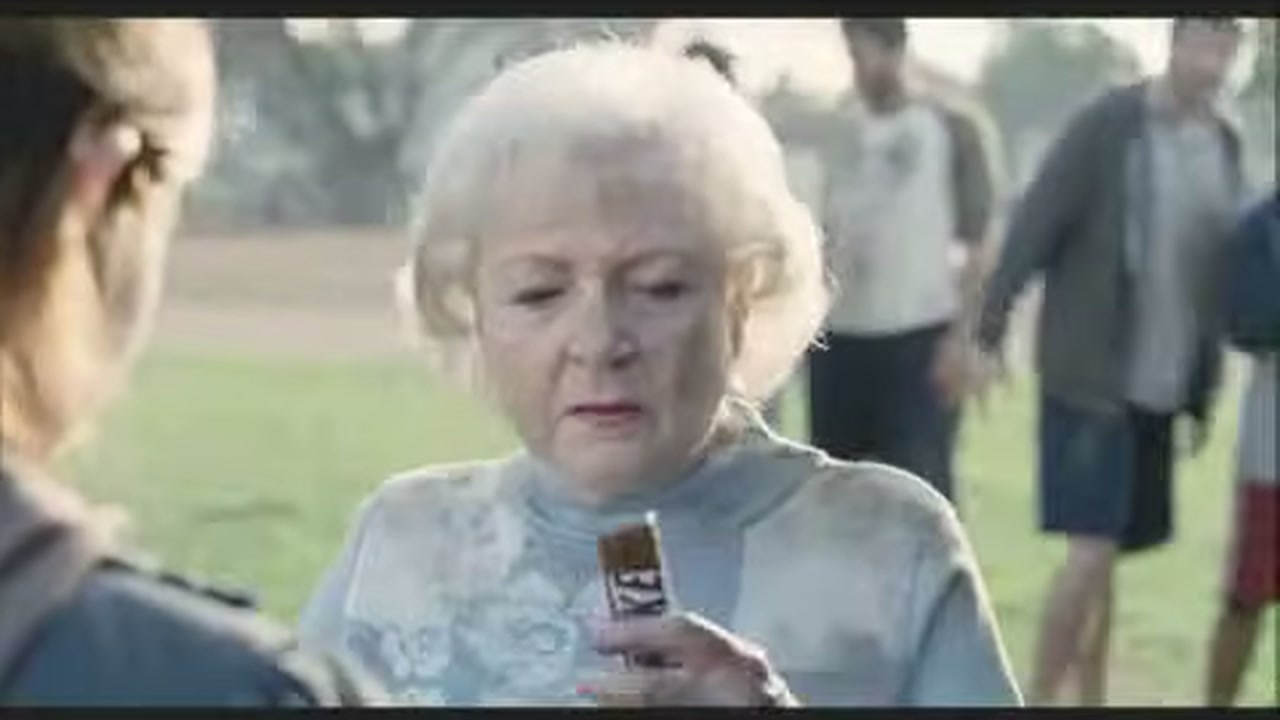
In 2010, Snickers launched You’re Not You When You’re Hungry - “You are not you when you are hungry.” In the first video, Betty White plays American football with young men, gets tackled hard, and eats a candy bar. After this, Betty disappears, and the young player appears on the field again.
This scheme was easily transferred to dozens of markets, because there is almost nothing to translate in it. Hunger changes character. Snickers is bringing back the man. The celebrity can be replaced by a local one, the situation can be rewritten, but the cause-and-effect relationship remains in place.
According to Campaign's analysis, approximately two years after its launch, the campaign was running in 58 markets, representing 88.7 percent of Snickers' global sales. The sales growth rate reached 15.9 percent, 9.4 times higher than the first phase. This does not mean that one video provided all the growth. This means that a clear formula has withstood global scaling and has not lost meaning in translation.
You’re Not You When You’re Hungry - “You are not you when you are hungry.”
Burger King: Competitor Becomes Entrance to Store
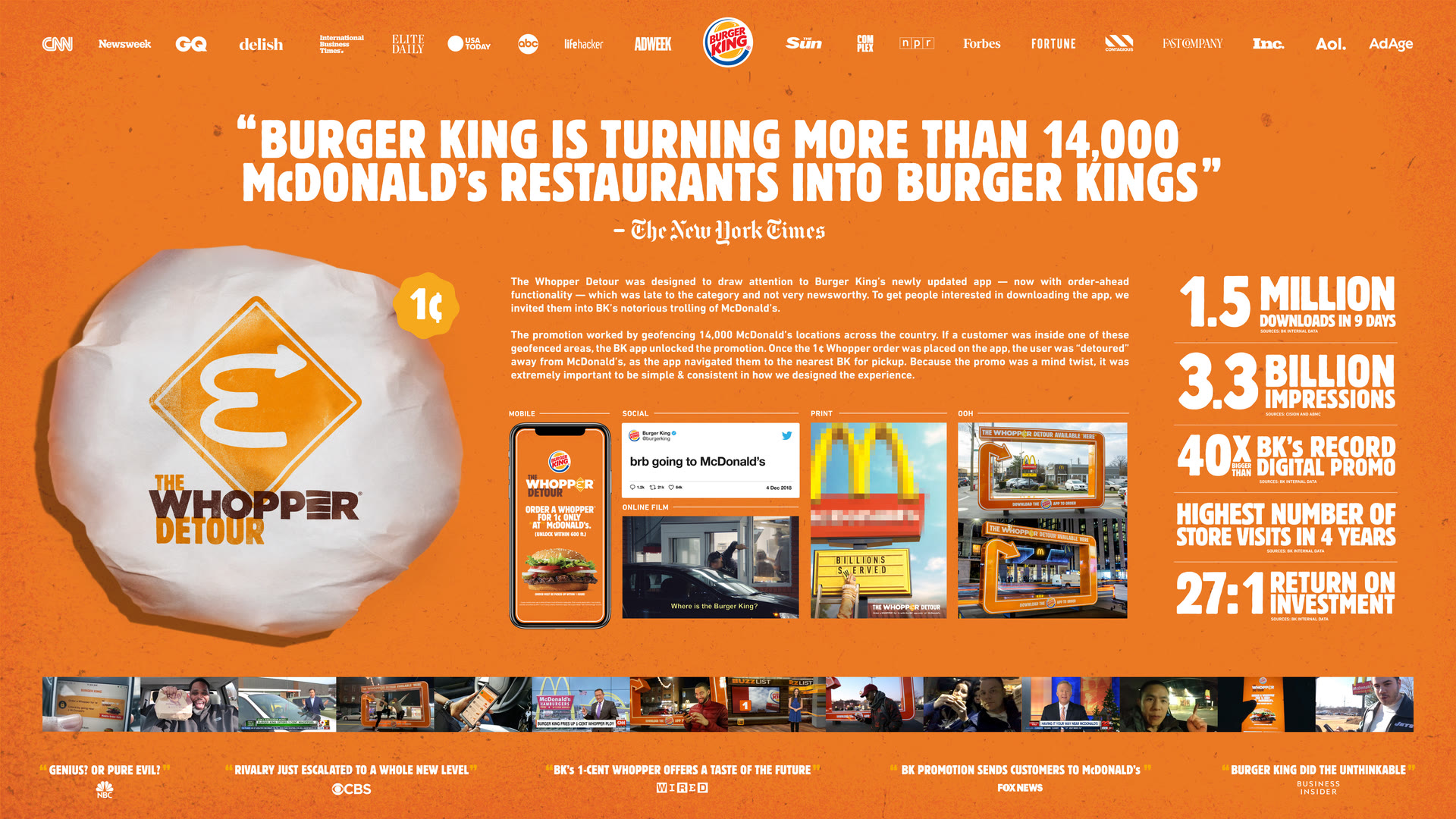
In 2018, Burger King launched The Whopper Detour. The name can be translated as “Hook for the Whopper” or “Detour for the Whopper.” For one cent, the burger was sold only to those who opened the Burger King app within a radius of about 180 meters from one of the 14 thousand McDonald's restaurants. After ordering, the application built a route to the nearest Burger King.
The joke wasn't in the poster. McDonald's, with its network twice as large, became a free chain of places where Burger King's promotion worked. To get to the joke, a person had to download the application, turn on geolocation, place an order and drive to the restaurant. Each step simultaneously brought him closer to the purchase.
According to WARC and Effie, the app was downloaded 1.5 million times in nine days; The campaign generated $15 million in additional revenue and a 37 to 1 return on investment. The One Club cites 3.3 billion impressions and calls the campaign forty times more successful than any previous Burger King app promotion.
The Whopper Detour — “Hook for the Whopper”; the literal meaning is a route with a deliberate detour.
Tide: the ad block that infected other videos
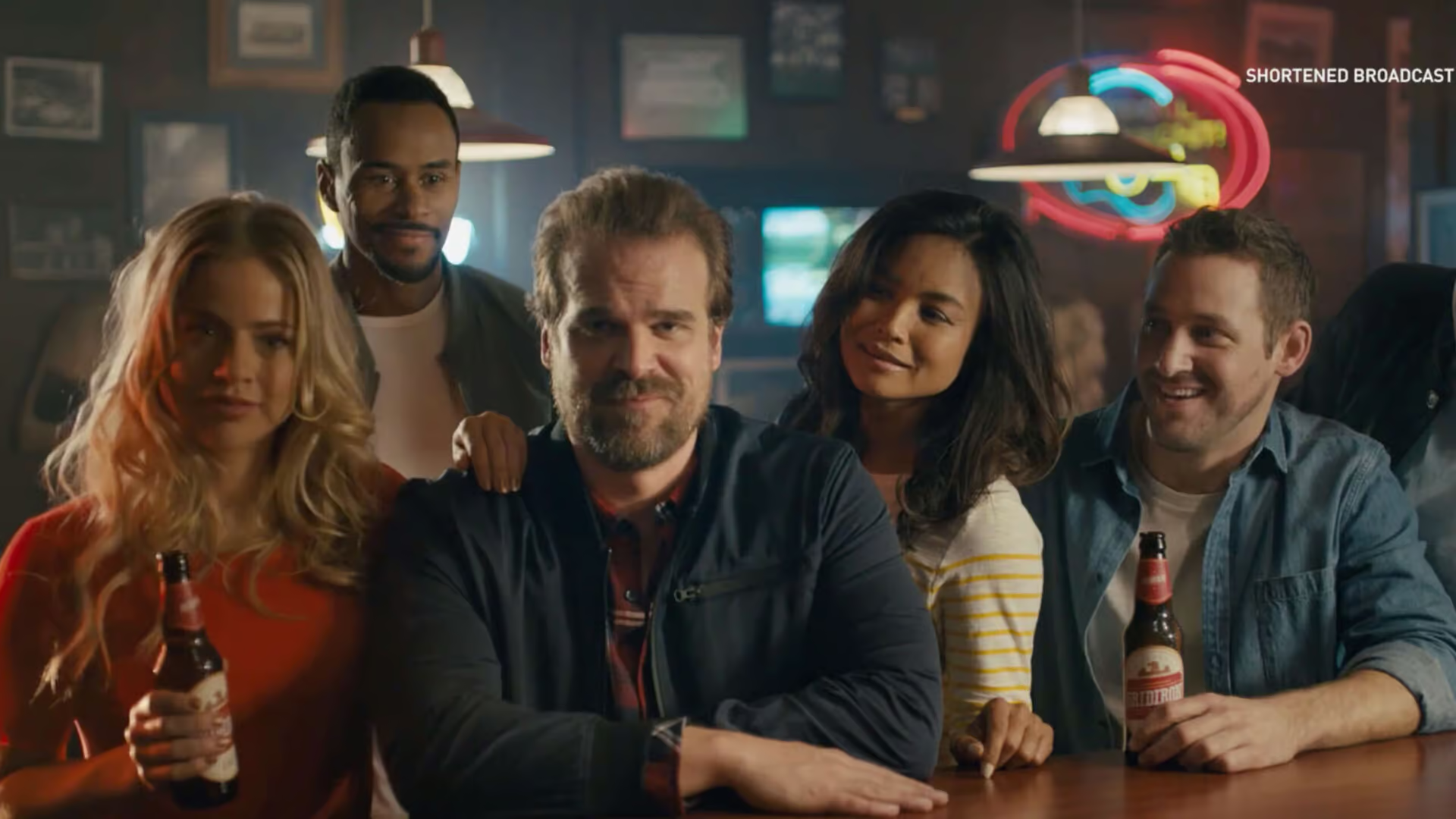
At the 2018 Super Bowl, Tide opened the ad as a typical car commercial: car, handsome man, spotless clothes. Then David Harbor asked: If every ad shows clean clothes, doesn't that mean every ad is actually a Tide ad?
The campaign went on to parody recognizable genres and Procter & Gamble's own brands, including Old Spice and Mr. Clean. After the first video, the viewer could no longer watch the next advertising block in the old way. Any white shirt became evidence.
The joke didn't say that Tide washes better than its competitors. It changed the viewer's perception: clean clothes, usually an invisible part of the advertising picture, turned into proof of the product. As D&AD notes, Tide has turned the usual viewing of an ad block into a game.
According to The One Club, the videos were seen by more than 103 million people, the hashtag #TideAd was used over 45 thousand times, and more than 680 publications wrote about the campaign. The total reach was estimated at 3.6 billion impressions. Saatchi & Saatchi indicates sales growth of 35 percent, but does not publicly disclose the period for which it is calculated. This is therefore a stated campaign result and not an independently verified figure.
It’s a Tide Ad - “This is a Tide commercial.”
What do four successful campaigns have in common?
In all four cases, the humor can be summed up in one sentence, but cannot be separated from the product.
At Pakendikeskus, the news ends with a specific item from the catalogue. At Snickers, the transformation is canceled by the bar. Burger King has a joke asking you to place a mobile order. With Tide, the very cleanliness of the advertising world becomes a demonstration of detergent.
The first sign: the viewer gets the role. He learns the news from Pakendikeskus, guesses the “hungry” celebrity at Snickers, drives from McDonald’s to Burger King, or starts looking for Tide in someone else’s advertisement.
Second: the joke doesn't break down in translation. The exact pun Pakendikeskus may only live in Estonia, but the connection with the subject is immediately visible. The ideas behind Snickers, Burger King and Tide are explained without a forty-minute cultural tour.
Three: success can be measured by action after laughter. The person remembered the assortment, went directly to the website, downloaded the application, made an order, and changed his attitude towards the brand. The “like” mark remains useful, but is no longer the only proof of success.
The box should remain in the frame
Humor in advertising is often defended as an independent art: the main thing is to be noticed. This is a convenient position until the moment when you need to show the cash register.
Pakendikeskus is interesting not because it has learned to quickly joke about the news. The Internet produces fast jokers for free. Another thing is interesting: the company has built an editorial conveyor, on which the agenda passes through the warehouse every time. Therefore, in the finale, not only the replica remains, but also the box.
- Pakendikeskus / Tabasco: Kuldmuna 2024 competition entry
- Ads of the World: This Is Not The End
- Pakendikeskus: results of Kuldmuna 2024 And «Pakendikeskuse kroonika»
- Kuldmuna: Appi ruttab Pakendikeskus
- Best Marketing: Aasta Turundustegu 2023
- Communication Arts: Snickers And Campaign: global campaign results
- WARC / Effie: The Whopper Detour And The One Club
- D&AD: It’s a Tide Ad, The One Club And Saatchi & Saatchi
Images are shown as editorial screenshots and original footage with sources indicated. Figures from competitive bids and agency cases are noted in the text separately from the independent assessment.