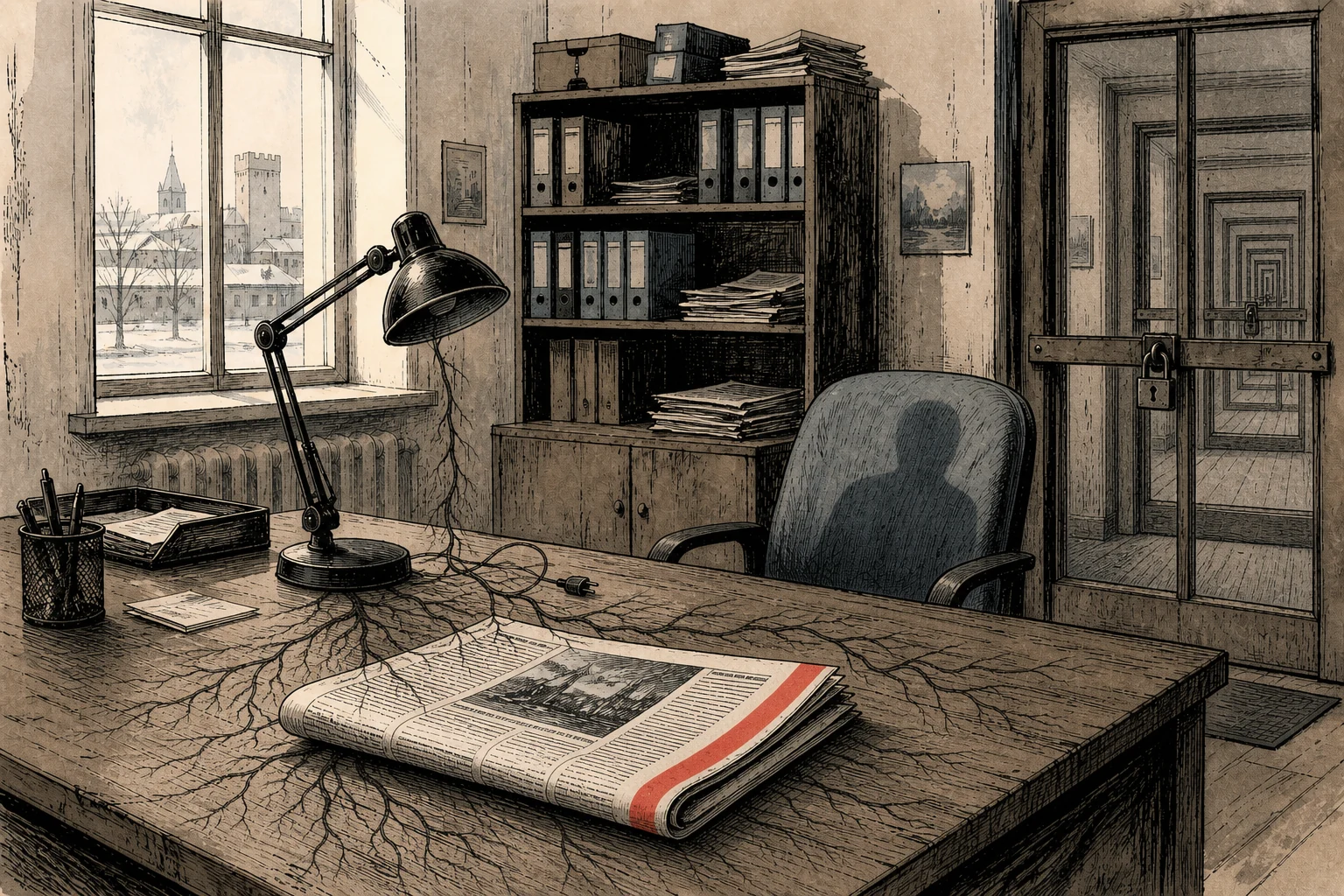
In June 2026, the next issue of the “Narvskaya Gazeta” was not published in Narva. A week later the next one didn't come out. The site was still opening, the old texts were still there, the names of the employees remained in the contacts section. The newspaper looked alive in much the same way as a store looks alive in which the sign is lit, but the door no longer opens.
It wasn't a sudden end. In November 2025, the owners put the publication up for sale. At the end of December, the newspaper and website were bought by the Tallinn MTÜ Tribune, which is associated with the portal Tribuna.ee. The new edition promised a continuation. It lasted five months: salary delays began in the spring, employees left, printing stopped at the beginning of June, and then the website froze.
Thus ended the story of the last paid city newspaper. But the Narva news was not over. “Gorod” is still published on paper and on the Internet, ERR and Põhjarannik maintain their own feeds. City portals are updated each at their own pace.
The rest is flying around the phones. Eyewitnesses post videos on Facebook. Drivers report accidents to Narva Traffic, border teams count the queue at the bridge.
The city government publishes its own messages. Republican editorial offices turn to their people in Narva when local history becomes important for the whole country.
There is no less news. They just went to different rooms, and it’s not always written on the doors who works inside, who pays the electricity bill, and where the editor is.
A newspaper does not disappear at once
The closure of a paper publication has an unpleasant quality: it seems like a local business failure. Income and expenses did not match, the owner was tired, advertising went online, the reader did not want to pay. All this is true, but the matter does not end there.
A newspaper produces more than just a ream of paper. It keeps an archive and trains people to ring up and ask questions. And it usually employs a person who remembers who promised to repair the same sidewalk ten years ago. When a publication is closed, these functions are not transferred to the next owner by deed. They fall apart.
“Narvskaya Gazeta” traced its history back to “Narvsky Worker”, which appeared in 1940. After 1991, the newspaper changed its name and gradually became a separate city institution. It lived on subscriptions, retail and advertising, published official announcements, and produced project materials. In recent years, this design has held up increasingly poorly. Selling for a relatively small amount did not save it, because the new owner did not receive a magical money printing machine, but an old local business with all its expenses.
Now the gazeta.ee website works like a neatly left archive. The latest publications date back to the beginning of June. This is an important distinction: the domain exists, the editorial office does not. Such ghosts are often found on the local Internet. The website of the Narva newspaper is also available, but its feed stopped in September 2024. The municipal “Narva Reporter” has not been published since 2022, although the institution that published it is still listed in the process of liquidation.
Brands last longer than teams. The search engine continues to bring the reader to them, old pages collect random traffic, contacts look valid. Therefore, a simple list of sites exaggerates the size of the media market. To understand who is telling Narva today, you need to look not at domains, but at people, the regularity of publications and the origin of money.
Paper: free gets read, paid does not sell
After the closure of the Narvskaya Gazeta, Gorod remained the main city paper publication. This is a free Russian-language weekly magazine with a website and a stated circulation of 30,700 copies. It is delivered to mailboxes. This model solves the main problem of a local newspaper in advance: the reader does not need to be convinced to buy an issue. You need to convince the advertiser that the issue will reach the reader's home.
Hence the content. Next to city news live announcements, congratulations, useful materials, advertising pages and content marketing. On the website, paid publications can be found with the appropriate mark. “Gorod” does not hide the fact that it sells not only square centimeters, but also the attention of the audience.
Free shipping has a power that is hard for a local site to achieve. The newspaper ends up in a person’s possession without registration, subscription or algorithm. But the declared circulation does not yet answer questions about actual delivery, reading and returns. The publication must disclose this data itself or confirm it with an independent measurement. So far we know the size of the printed batch from the words of the editor, and not the number of copies read.
“The Narva Worker” is also no longer published on paper. At the end of 2025, it was described as a free newspaper that appeared once every two weeks, and in June 2026, the city included the brand in the list of media partners of Narva Days. There is currently no print edition; the exact date of its termination has yet to be determined. In the local media market, such inertia is common: the name continues to live in documents and conversations after the latest issue has disappeared from distribution outlets.
So the current paper in Narva was actually reduced to one noticeable city publication - “City”. This is more important for the market than simply reducing the list of newspapers. When there is only one regular print channel left, the advertiser has nothing left to choose from, and the reader has nothing to compare editorial decisions with.
Professional journalism: a studio, a county and a phone in Tallinn
The most sustainable professional newsroom in the city belongs not to a local private business, but to a public broadcaster. ERR has a Narva studio on Linda Street. The current list of employees names four people: correspondent-cameraman Alexander Krasnoumov, editors Yuri Nikolaev and Mikhail Komashko, as well as photographer, cameraman and editor Sergei Stepanov. This is not the telephone number of a person who gets a call from Tallinn in case of an emergency, but a permanent production point of the news service directly in Narva.
ERR money does not depend on whether the local store bought a banner next to the news about the town meeting. This gives the editorial staff stability, but at the same time takes it out of the local advertising market. The public broadcaster competes for topics, characters and attention, but not for the same advertising euros that a private newspaper lives on.
The second important professional player is the county newspaper Põhjarannik, or "North Coast". Its editorial office is located in Jõhvi and is headed by Erik Gamzeev and Erik Kalda. At the same time, Ilya Smirnov is constantly located and works in Narva. Therefore, the newspaper's view of the city cannot be considered external: the Narva agenda is collected locally, and then becomes part of the overall picture of Ida-Viru County - together with the life of Kohtla-Järve, Jõhvi and industrial disputes of the entire region.
Republican private media do not have one common pattern. Rus.Postimees directly names Diana Kharlamova as a correspondent for Ida-Viru County. She lives inside the regional agenda, regularly writes about Narva and does not need a business trip to find out how the next dispute in the city assembly ended.
RusDelfi's Narva agenda in 2026 is led by several authors. Roman Vikulov writes about the city as a local journalist; Ekaterina Konakova and Evgenia Parv produce news, reports and interviews from Narva. At the same time, the open structure of the editorial office does not allow them to confidently distribute full-time positions. Therefore, what is more important here is not a sign on the door of a non-existent news office, but the constant presence of authors in the city and regional newswire.
Different models converge in one place. The system copes well with events that are already recognized as national. If the government changes in Narva, a monument is dismantled, the border is closed, or a large facility is opened, the editors will find a way to get material: they will involve their own person, send a journalist, or turn to a local author. Everyday history, which has not yet proven its own importance, remains for those who are constantly in the city. It is here that the closure of one small editorial office is felt most strongly: it is not another retelling of a big event that disappears, but a person who could be the first to notice a small one.
The city where people come to test loyalty
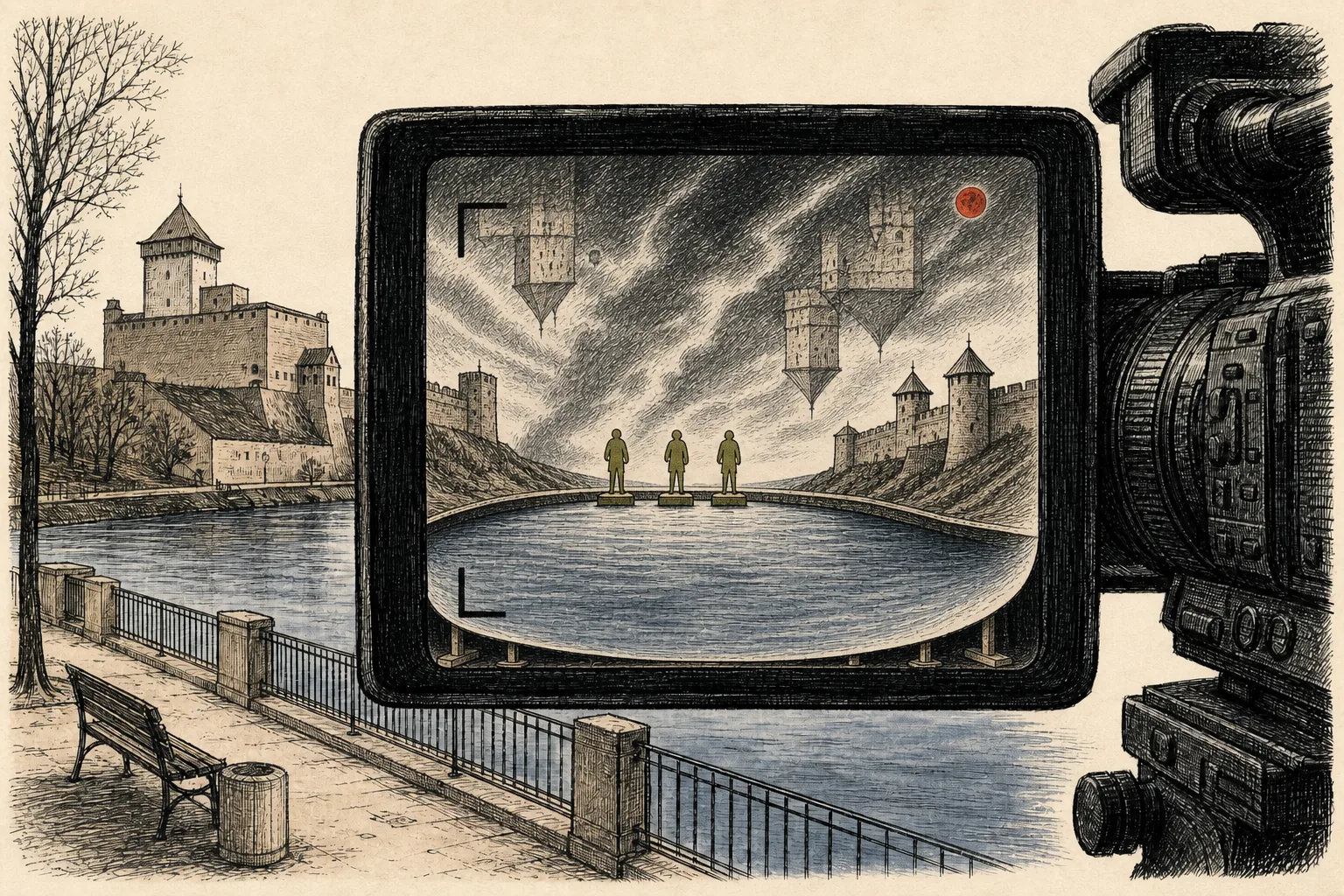
Narva has another media market, although local stores do not buy advertising there and city politicians do not know when the next order will appear. The city regularly appears in the feeds of major international editorial offices. For Narva, this is a huge amount of external attention.
But attention is distributed very unevenly. We looked at the top 78 results for Narva in eight major international media outlets. 63 headlines directly addressed security, relations with Russia, or the political situation of Russian-speaking residents. The remainder also included texts about the “end of the free world,” divided history, and Putin’s possible next goal—just without the obvious keyword in the title.
The result is a strange imbalance. Narva receives abundant coverage, yet international readers meet the same city again and again: it stands on NATO's border, speaks Russian, argues about monuments and watches for unmarked men on the opposite bank. Residents often enter these stories chiefly to answer two questions: where do their loyalties lie, and what do they think of Russia?
These topics cannot be called fictional. The border exists, there is a war, relations with Russia determine the life of the city, and language reform changes schools and families. One-sidedness begins not where the journalist asks these questions, but where there are almost no other questions left. The foreign press is rarely interested in where Narva residents work, how they live and age, and how local authorities spend money. Even a new factory or cultural event is easier to get into the international news if it can be linked to European security or Russian influence.
The mechanics are clear. An international correspondent arrives for a short time and usually already knows the topic of the business trip. The editors need a symbol that will quickly explain a major conflict to a distant audience. Narva is almost too convenient for this: two fortresses, a river, a border bridge, Russian flags on the other side and a city where most residents speak Russian. It’s easier to take such a picture in a few days than to understand why a person changed three jobs, how the closure of one newspaper changed local politics, or where the advertising budget of a city institution goes.
As a result, a local journalist tells what happened in Narva. A national newsroom decides whether this is important for all of Estonia. An international newsroom comes more often to check whether the next war is starting here. None of these optics are false in themselves. But the international gaze is so noticeable that it is gradually replacing the city with its geographical location.
For local newsrooms, this is both an opportunity and a trap. They become guides, translators, fixers, providers of heroes and context for large media. Their knowledge is in demand, but it is not they who set the final framework. Narva gains international visibility, but it has to talk about a topic that has already been chosen for it.
A city of portals
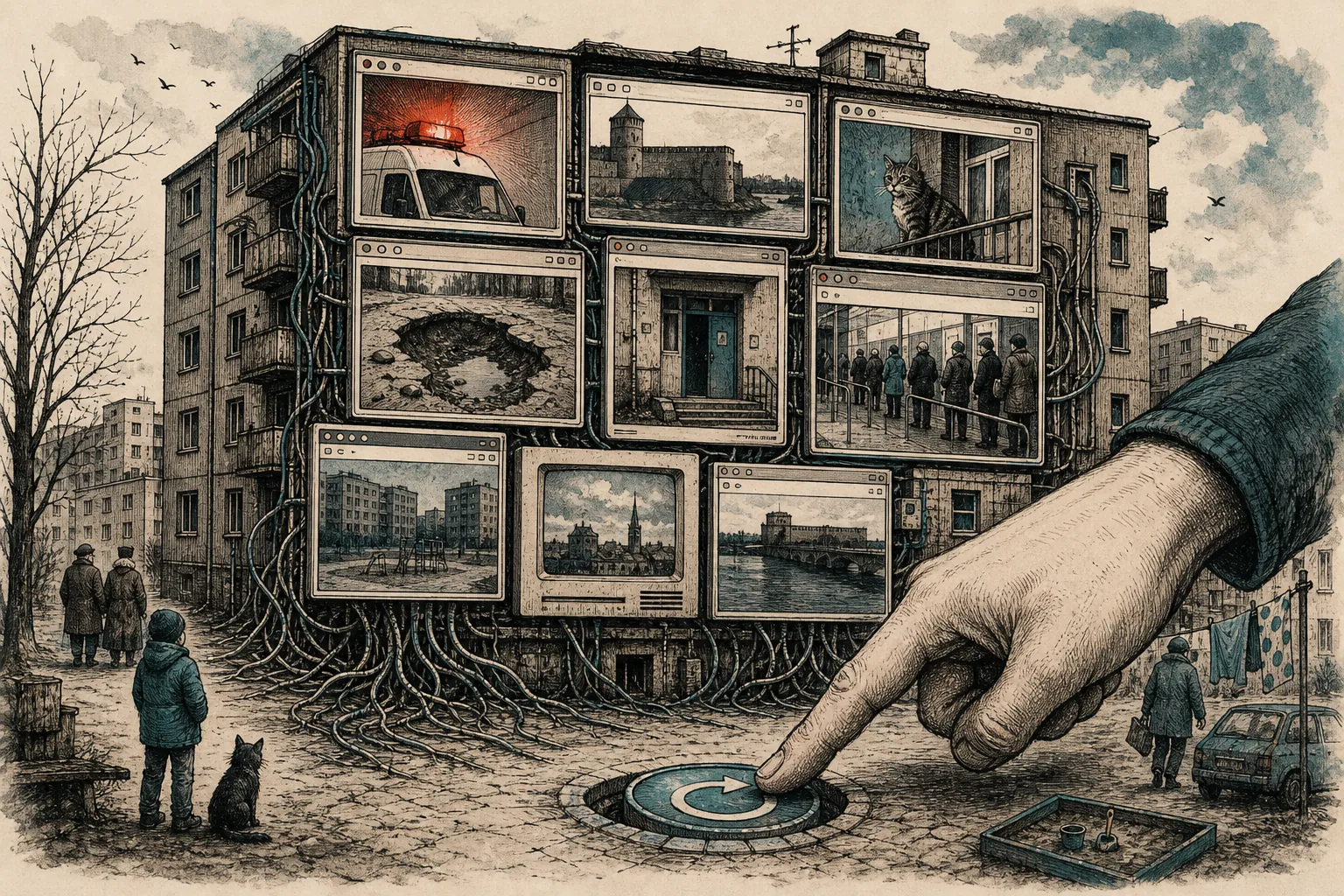
The Narva Internet did not grow from just one digital newspaper. It looks more like a communal apartment, where each site once occupied its own room and furnished it to taste.
SETI.ee is one of the oldest city portals. It contains news, reader messages, a forum, announcements, cameras and schedules. The site displays its own visit counter, but there is no independent data about its audience. SETI has something you can't buy with just one advertising campaign: user habit. A person comes to find out the schedule or read the forum, and at the same time sees the news.
STENA.ee calls itself a social network for people's journalism. Aggregated materials, user texts, historical photographs, blogs and comments are published there. This is not editorial in the classical sense: a significant part of the content comes from outside, and the author may hide behind a nickname. But this is why STENA is important for urban conversation. It not only reports what happened, but also preserves the controversy surrounding the event.
Antoshka.ee connects news with announcements, cameras and city entertainment. The reader is invited to send a photograph or message, including anonymously. Narva Online combines a rare news feed with a directory of organizations, SEO promotion and website creation. Narva News looks closer to a regular news portal: the site names the editorial team, has a feed, social channels and an open advertising price list.
The differences matter more than the shared label “portal”. One publishes original reporting, another aggregates other outlets, a third sells businesses space in its directory, while a fourth runs a forum and classifieds. All may carry the same story, but the work behind each publication is different.
TEMA.EE stands out separately. The site publishes city news, videos and podcasts from Radio Narva. In the basement there is OÜ AMTEK PAR, a company registered as an advertising agency. It is led by Viktor Spitsa. MTÜ Narva FM, which is also managed by Spitsa, is registered at the same address. This suggests a general outline of the portal, radio and advertising production, although the exact contractual relationships and on-air status of Radio Narva remain to be verified.
In a large city, the proximity of the editorial office and the advertising department will not surprise anyone: they sit on different floors and try not to use the same door. In a small market there may be one floor and perhaps one person, and the door generally leads directly to the studio. This does not make every piece an advertisement. But it is useful for the reader to know the structure of the room.
When news is sold along with light and sound
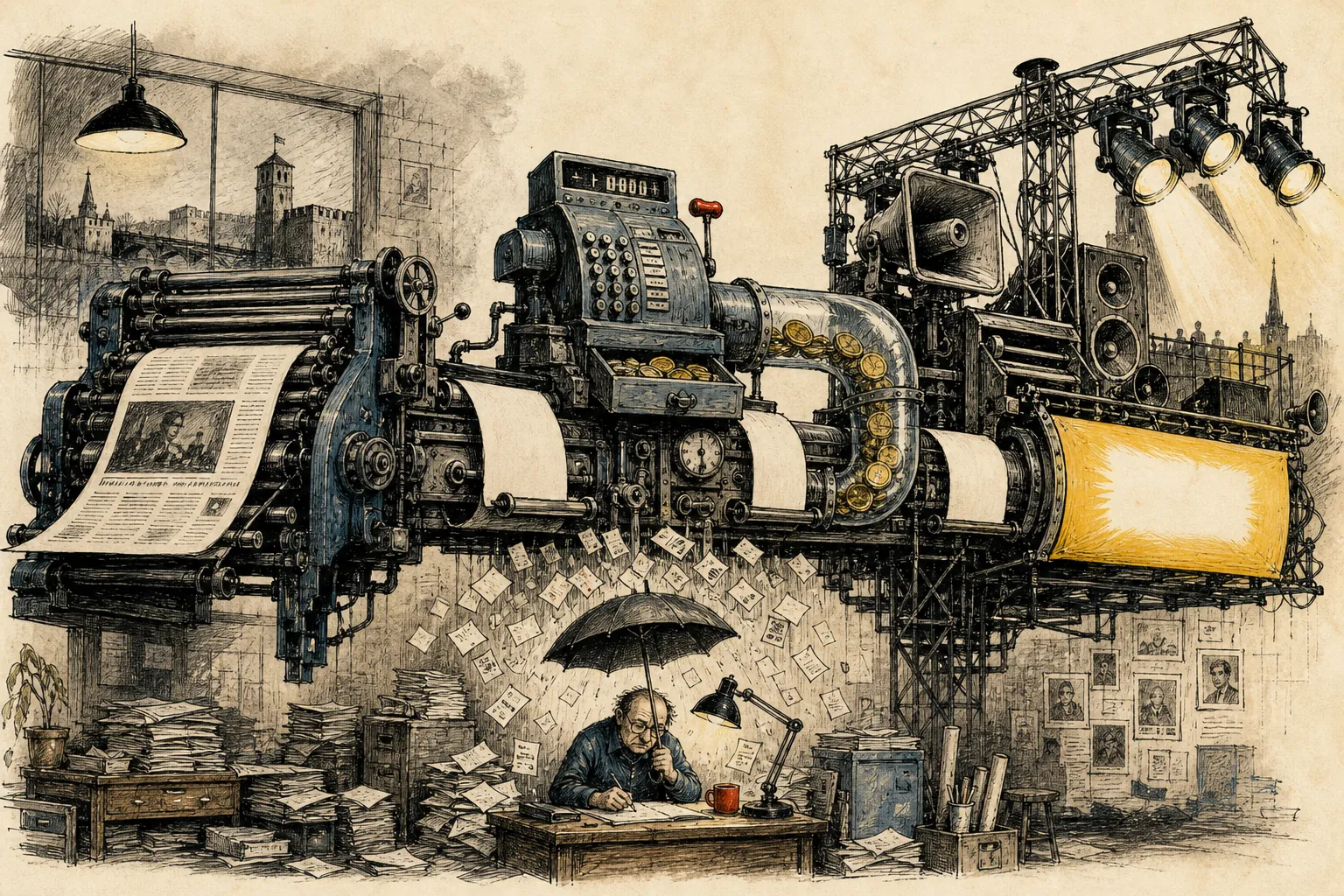
The local media market cannot be measured by banner sales alone. Sometimes the editors make money on the fact that they can write. Sometimes - on what can gather an audience. And sometimes a camera, website and news feed are bundled into a larger set of services along with a stage, broadcast and LED screen.
The regional project of molodoi.ee and ESN TV operates in several cities of Ida-Virumaa. The portal publishes news and videos, but nearby it offers the creation of websites, the organization of broadcasts, and the rental of stage equipment, light and sound. Such media covers the event and at the same time can provide it technically.
Narva Online sells business presence in the directory, SEO and website development. TEMA is associated with an advertising agency. Narva News offers banners, affiliate publications and creation of texts for search queries. Its commercial offer even includes the ability to post gambling materials without authorship on behalf of the portal. This does not prove that any published text was paid for by anyone. This shows what services the editorial office is willing to sell.
In a small market, the boundary between journalism and advertising production lies not in the façade of the company, but in the labeling of a particular material. If the customer paid, the reader should see it. If the editors themselves have chosen the topic, collected the facts and are responsible for the conclusions, the text should remain editorial, even when there is a banner of the same hero nearby.
This boundary is difficult to test. "City" has noticeable marks for paid materials. STENA allows commercial publications through the administration, but there is no open, current price list. For a number of sites, it is impossible to quickly determine even the legal owner. The market exists, prices are sometimes published, but the full money card remains off the screen.
The city publishes too
Private media do not only compete with each other. The city government, institutions, schools, museums, hospitals and cultural centers maintain websites and social networks. They are the first to receive their own documents, photographs and comments from managers. They don't have to wait for a journalist to report about a street opening or a concert.
This is useful communication with residents, but not journalism. The institution can detail what it did. Much less often, it itself will ask the question why it did it late, expensive or not as promised.
Narva has already tried to become a full-fledged publisher. In 2018, the city established SA Narva Linnaleht, which later published the Narva Reporter. The publication received budget money and at the same time sold advertising. Private newspapers objected: the municipal player could set prices without regard to the usual economics of the editorial office. In 2022, the city decided to liquidate the institution. Four years later, it is still listed in city documents as being in liquidation.
After the closure of the municipal newspaper, public money did not disappear. It changed route. The city buys the publication of official announcements, orders information services and develops its own channels. In 2025, Narvskaya Gazeta had the contract for official announcements; the draft budget for 2026 provided 2,500 euros for this work.
The amount is small even for a small editorial office. More important is the principle itself: the city remains at the same time a source of information, a customer of placements and an object of journalistic control. Therefore, contracts for advertising and information services are needed not only by accounting departments. They help the reader understand who is the client in this system.
The editor nobody appointed
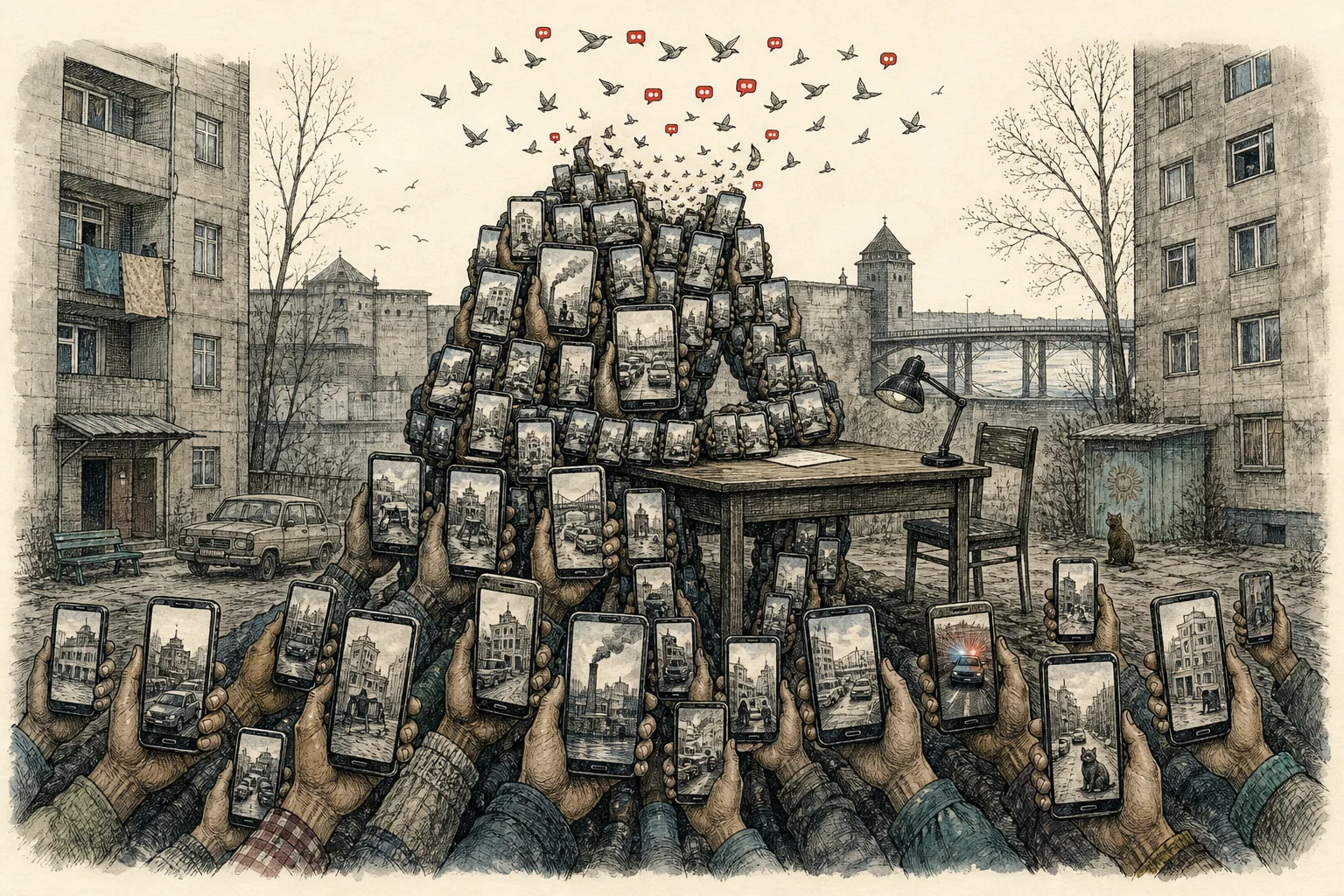
A driver caught in a jam on the Krenholm viaduct does not ring the newspaper; they post on Facebook. When the border queue grows, Telegram knows before an official comment appears. A photograph of an animal or smoke in a courtyard reaches a city group first, then ERR or a news site.
Large local Facebook communities have become a distributed eyewitness service: no shared news editor, but hundreds of phones. An administrator at Narva Traffic or “Our Estonian Narva” decides which posts to approve, delete or pin. Formally, they keep order in a group. In practice, they assemble part of the city's news agenda every day.
That speed comes with a price. The user is not required to call the other party, check the date of the photo, or separate speculation from fact. The editors are obligated, at least if they want to remain an editor. Therefore, a post in a group can be the beginning of news, but should not automatically become finished news.
Telegram is adding several more different markets. “Suffering Narva” works as the author’s channel of journalist Diana Kharlamova: it mixes observations, news, humor and the search for heroes. Border groups perform almost a dispatch function - they count people, cars and waiting hours. Portal channels distribute links to their own texts. It is pointless to compare them only by the number of subscribers: a thousand local readers of the author’s channel and several thousand participants in a chat about the border come there for different things.
But the advertiser sees the figure. So part of the local money goes not to the editor, but to the page administrator. There may not be a public price list, the agreement is placed in personal correspondence, and the advertising mark depends on the rules of a particular group. This layer of the market is almost invisible in media accounting reports, although it is where the fastest urban reach often lives.
Who owns attention
The Narva media market is not empty. On the contrary, it is cramped. One participant prints a newspaper, others run a studio or website, others collect news on social networks, and others come from abroad with a question already formulated. The problem is not the lack of information, but the fact that they all call different jobs information.
For ERR, news is a public responsibility. For a private newspaper, it also gives readers a reason to open an issue beside paid advertising. An aggregator uses it to bring people back to the site; an advertising agency may bundle it with other services. The city government uses news to explain its work, while a Facebook group values a post that starts a conversation. Each model is legitimate provided readers can tell which one they are dealing with.
Often they cannot. Several prominent sites make their owners difficult to identify. Audience figures are either unpublished or supplied by the sites themselves. A free newspaper's circulation does not equal its readership; a Telegram subscriber does not equal a view; opening a directory does not equal reading an article. The figures fit into one table, but the result describes accounting rather than people.
The closure of Narvskaya Gazeta made this structure easier to see. The city did not lose its only source of news, or even its fastest outlet. It lost one of the few newsrooms where a newspaper, website, archive, journalists and legal publisher still formed an intelligible whole.
The vacated space did not remain empty. It was quickly taken over by those who were already there: the only noticeable free newspaper, the public broadcaster, portals, groups and institutions' own channels. Everyone took the part of the work that they know how to do. One reported the news, the second showed a video, the third collected comments, the fourth sold the placement, the fifth took away another story about the border from Narva.
Only the old editorial table was not added among them.