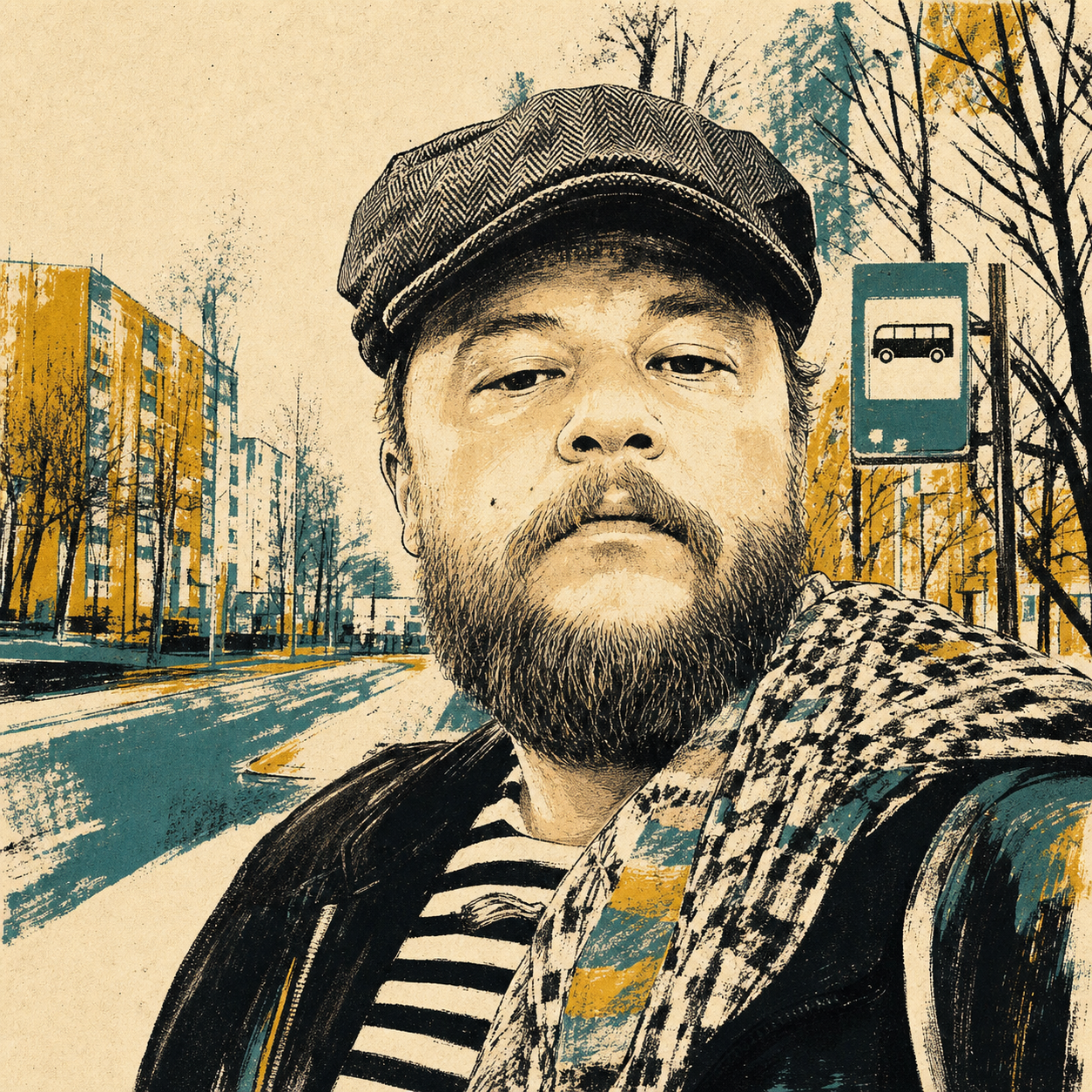
Growing up in Narva in the nineties was interesting, but I wouldn’t want to have that experience again.
There was complete Pelevinism all around, everything was collapsing, the old was being replaced by the new, which also did not stay long and quickly disappeared somewhere.
Children's life then was barefoot and therefore perfect - even the fact that there were very tense adults around could not erase the childish optimism from us. It seemed to us that as we grew up, everything would change thirty times more, and right now we definitely had nothing to worry about.
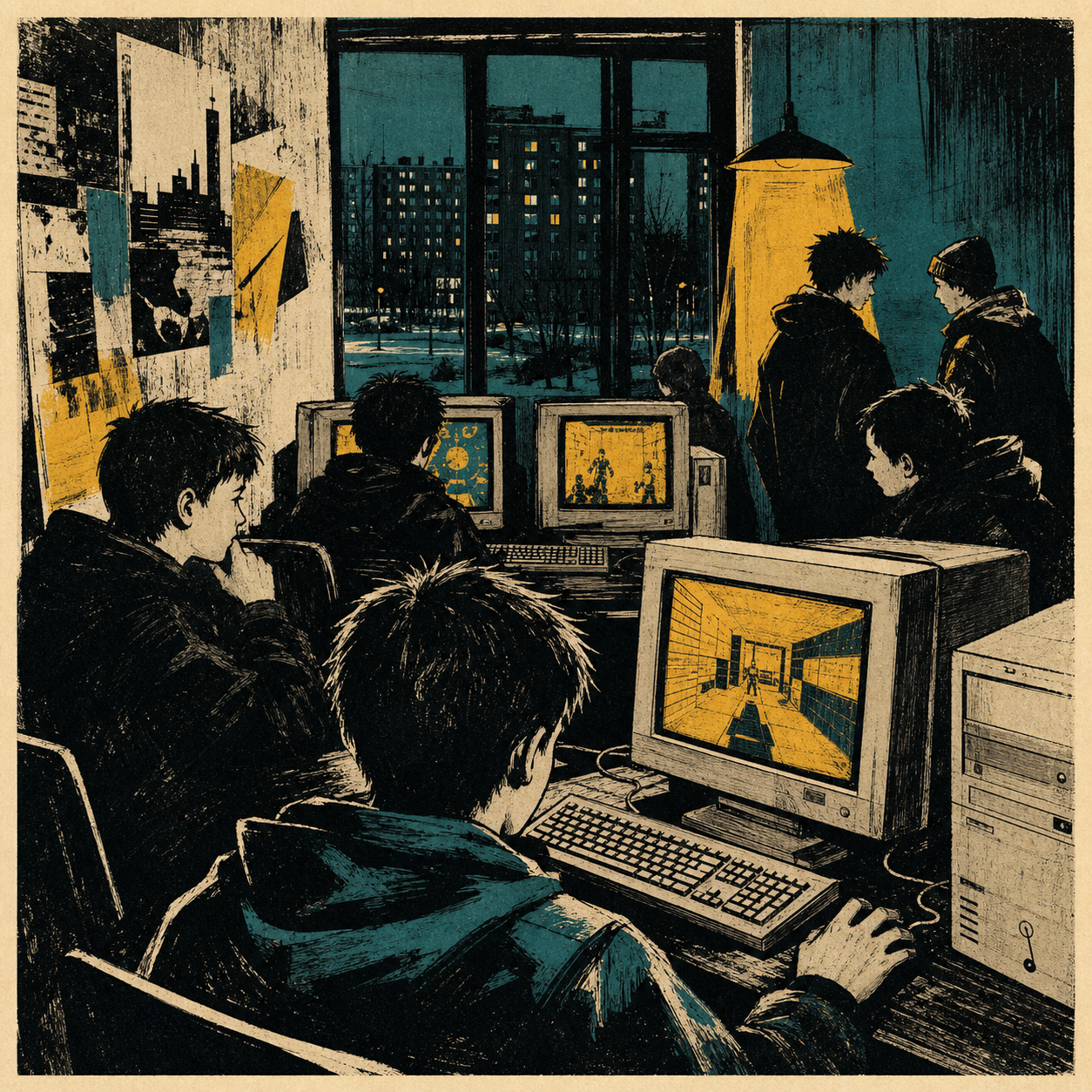
The first section of society that I found myself in in Narva was a computer club with the pathetic name Galaxy, it was located a few steps from the city library. In the late nineties, there was nowhere for young people to hang out, and this computer hole became for us a headquarters, a barracks, and an infirmary. Many of the comrades whom I met there at a tender age have still not disappeared from my horizon. Cheat code expert turned journalist. A fighting game enthusiast and a well-known dentist. A supporter of massive tank attacks is gnawing on semiotic granite in Tartu.
Standing apart among the citizens of the new virtual world was a group of brothers who fed on a huge line of cars heading to Russia. I don’t know what and how exactly they “solved” there, but from time to time they were blown away by computers, where they played the same level of the same game for years; they disappeared, only to appear again after an hour or several tens of minutes and “extend for another hour.” No one remembers their names, of course, and no one knows what happened to them. Nevertheless, it was this gang that for the first time in my life clearly showed me that Narva can and should enjoy the benefits of its geographical location.
A city that grew up on the border sooner or later begins to live on the border. The only question is who and what exactly “decides” there - and in what order.
When did we become non-Estonians?
Suddenly everything turned out to be very serious, but no one warned us about it, and now we found ourselves non-Estonians in the country of Estonians. We didn’t think about Estonia and our place in it until the eighth grade. We met Estonians only during Estonian language lessons, and even then not always. We took the exam in the 9th grade, feeling that somewhere along the way to this room with the examiner we were deceived. The first “almost adult” summer lay ahead. Estonia was far away - somewhere in Tartu and Tallinn. Peter was closer and more accessible.
### **This is a 30-year story about deceivers and the deceived.**
2000s
At that time, I was still a Narvian - I was in a kind of limbo, when I was no longer Russian (I spoke differently than the Russian-Russians who came in large numbers to Narva-Jõesuu for the summer), but, of course, I did not become an Estonian either: “mom, dad, apple” - at about that level I spoke the language. My friend and I prepared very well for the final exam in the Estonian language: having established a relationship with our teacher, we received the answers to the test at the agreed time, and then everything was a matter of technique. The deceived became deceivers, and Tartu with its student life and eternal summer awaited us. Looking ahead, I will say that nothing came of the ambitious plan to obtain a major in political and managerial education, but one case is worth describing separately - this, again, was a clash with Estonia, about which I still knew little.
Our specialty riigiteadus (“state sciences”) was famous in that I was the first Russian to enter it in the last three years. The comedy of the situation was that while handing out my transcripts, some important uncle shouted out my name as if Estonia had just received the first intelligence information about me and was immediately mistaken. Not only did I not know anything about Estonia, but it also had virtually no information about me. A few days later, I carefully attended the organizational meeting of our group regarding initiation as students or some similar ritual. The parade was commanded by a huge blond man in an Estland T-shirt. I didn’t like the style, and I just as quietly left the last row, pretending that I was at the wrong door.
Time to pay your debt to your homeland
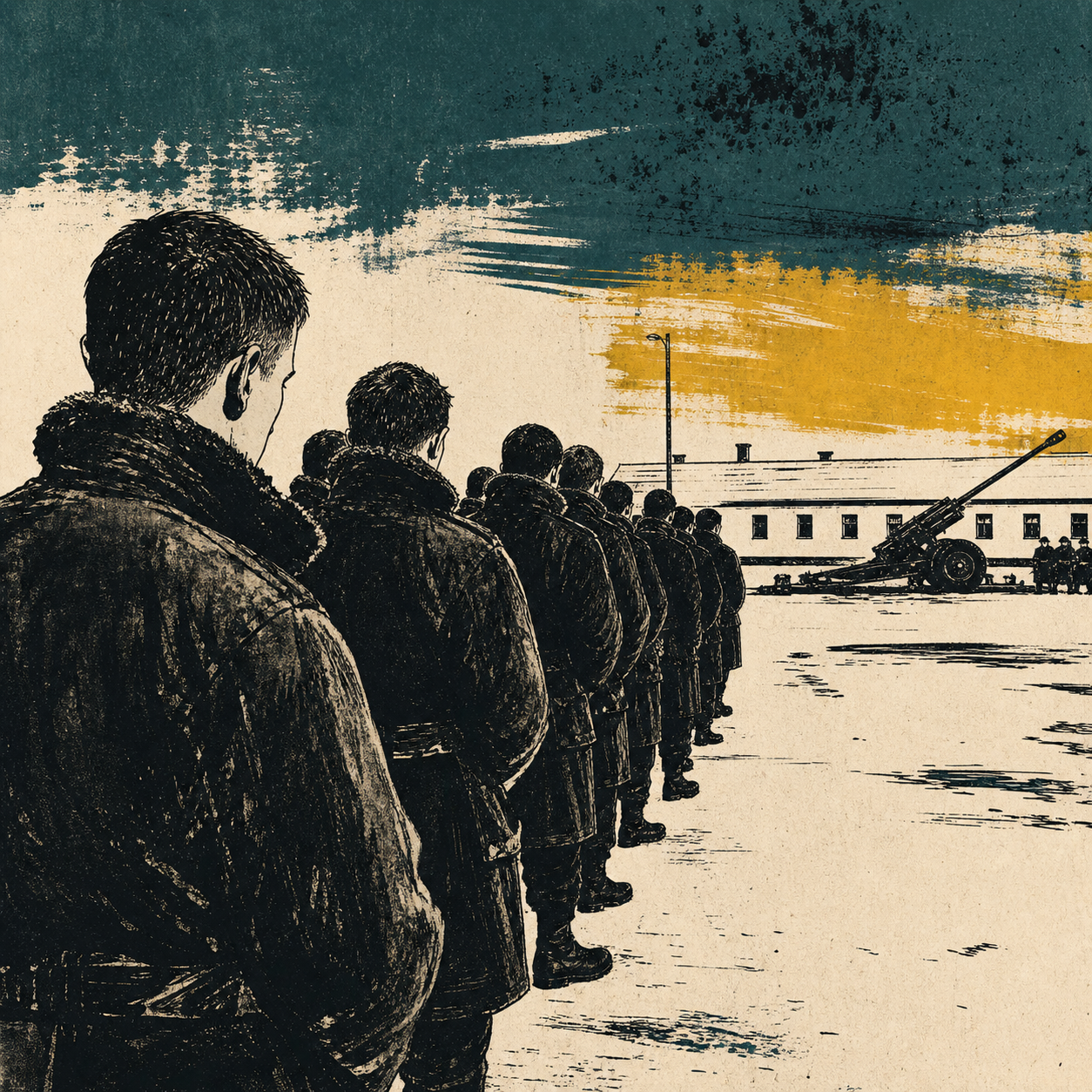
Then the native or non-native country demanded repayment of the debt. A skeptical Estonian woman at the Kohtla-Järve military registration and enlistment office politely asked where I would like to serve, and after I replied that it would be nice to do my duty in Tallinn, she assigned me to Tapa. About Tapa, I only knew a joke about the newspaper Tapa kommunist (literally translated - “kill a communist”), but I realized that very soon I would have to get to know this place better.
In general, in January 2004 I found myself in the ranks of the Estonian artillerymen. The service was fun, since there were about the same number of Russians in the unit as the average hospital population - 30–35 percent. The deceived again decided to become deceivers and serve for show in good conscience, but with a fig in their pocket. Somehow it just happened that no one really tried to mow, but none of the Russian-speaking people were in a hurry to repay their debt to their homeland either. In eight months, only a couple of people bothered to master the state language, and I was among them, because I sensibly decided that it was easier to fight for my rights in the language of my superiors. Which, by the way, cared little, if at all, about the national question. Here I got acquainted with rural Estonia, which turned out to be completely different from urban Estonia. The farm boys were suspicious and vindictive. But the main thing that we couldn’t wrap our heads around was that they kept knocking on us. In a situation where it seemed impossible to hit people on the noses in response, we worried with terrible force, because the rules of the game suggested that we either use the same tricks, which we categorically could not do, or remain silent and constantly look around.
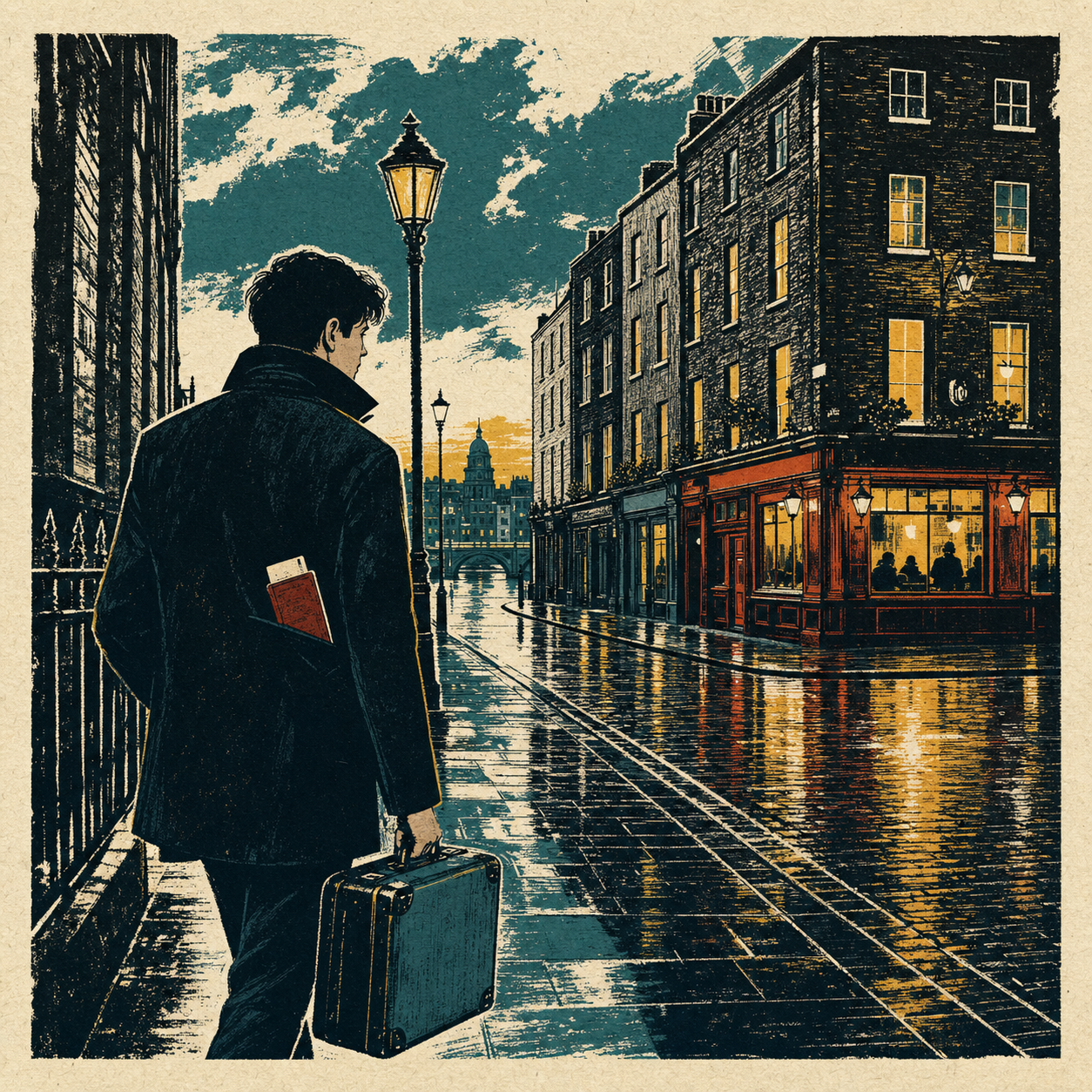
But there were also bright moments: when I arrived in Narva on leave, I made my way to one of the restaurants where my good friend worked, and there, with my bald head shining, I grossly violated the rules by drinking a glass of pirate rum. No trenches erased the Narva cosmopolitanism from me. While waiting for demobilization, I was slowly making plans, because in addition to NATO, which we joined a year earlier, the EU also opened its doors. The opportunity for visa-free travel beckoned, and by the summer of next year our small group of about 10 peers found themselves on the streets of Dublin. This is where I became an Estonian.
Harry Potter and the beginning of self-identification
The fact is that in Western Europe, nationality is determined by a passport - and that’s it. In Ireland, an Estonian citizen is an Estonian, despite the fact that in Estonia he is not an Estonian. The absence of these looking-glass things that we are so accustomed to here made me look at my native country in a new way. The Irish themselves, who very sacredly honor their history, especially that part of it where they fight the British for their freedom, helped me a lot in this. Unless, having conquered it, they quickly calmed down and began to do normal gesheft with the “hated Britons” without any hysterics and historical stigmas.
2007
After a couple of years of life abroad, imbued with the spirit of true democracy and a mature civil society, where people demonstrate for any reason, and politicians draw conclusions from this, I got ready to go home. A little tired of the big city, I hired myself to the editorial office of the Narvskaya Gazeta, whose staff I knew well from my part-time jobs during my school and student years, and, having packed my bag, rushed to Riga. I reached Tartu on a warm April day, which was remembered for massive civil unrest, police brutality and even a corpse. All the results of the drift that had brought the deceived and deceivers together for the last ten years were crossed out, and every newspaper editorial, every headline finished off the remnants of the integration process.
2010 - 2020s
In recent years, Narva has remained a city of contrasts. It is a non-Estonian Estonian city without any strong ties to the rest of the country. A city with its own problems, which, in general, no one on the “mainland” cares about. There is an Estonian enclave in the city - the college of the University of Tartu and the Narva Museum. Estonians who moved to Narva live their lives in these two places, get married, and have children. They themselves feel, in the apt expression of Katri Rajk, who ran the college for 15 years (now the mayor of the city), residents of a submarine. They talk about Narva as a place with great potential, but things haven’t gone further than talk in three decades. It is also common that in the corridors of power Narva is remembered only when things go badly: this was especially shown by the war in Ukraine that began in 2022. Journalists from all over the world flocked to Narva and diligently began to measure the facial angle of us, the Narvians, and calculate what percentage of us are potential separatists loyal to Moscow.
It seems to me that the point is that I managed to become an Estonian, but Narva did not. It will forever remain “Estonian Siberia,” where it is periodically proposed to exile one or another state office in order to increase the “presence of the state.” There is another pressing issue - the sacred Estonian cow - the issue of the Estonian language and Russian schools. There are still people who are sincerely surprised and angry when they learn that in Narva not every store and not every tavern can speak Estonian. But the thing is that a Russian-speaking resident of Narva, in order to move to live in Estonia, needs a visa - knowledge of the language. And anyone who has received this visa can then leave “Siberia” and return there only to visit elderly relatives and drink a glass or two of vodka, which he brought from Ivangorod, with a poet friend who works at a power plant.