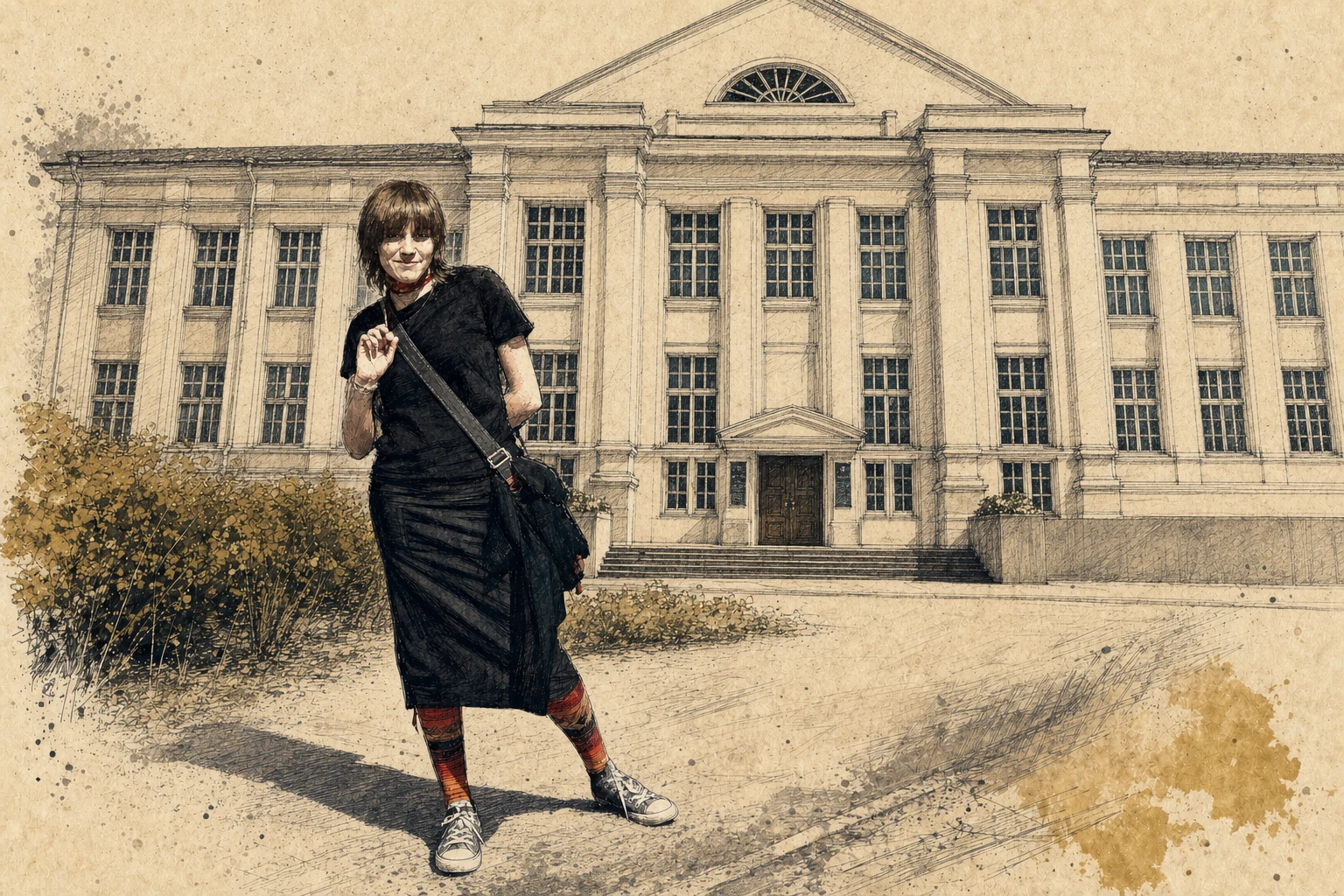
At the beginning of the 2000s, I worked for some time as a Russian-speaking guide at the Zoological Museum of the University of Tartu. The word “worked” here may sound too thorough. It seems that I was still studying for a bachelor’s degree and had to undergo some kind of internship, probably in zoology. I was offered to lead excursions in Russian, I agreed, and this was enough for a professional relationship to arise between me and forty schoolchildren.
The museum was then located at our faculty on Vanemuise Street. It still exists today, although it is now called the Natural History Museum of the University of Tartu. The institution is old, its history begins in 1802. In my time, the main population of the museum were stuffed animals, some almost a century old.
There stood wolves, bears, hares, birds and many other creatures who, after death, had to enter the indefinite service of the education system. Some of the animals have already been lightly eaten by moths. They looked at the visitors with glassy eyes and with all their appearance showed that they had seen more than one generation of students, schoolchildren and tour guides who were not fully prepared.
The animals were looked after, but their age still showed through. Somewhere the fur lay wrong, somewhere the pose seemed suspiciously human, somewhere the bear looked as if it was very tired of pretending to be a bear. This had a special museum coziness: not the glossy nature of a documentary, but an old ark in which exhibits and employees together tried to survive until the end of the working day.
In addition to stuffed animals, the museum had a small living corner. Among other things, clawed frogs lived there.
The clawed frog is the epitome of zen. She doesn’t try to please the visitor, doesn’t portray natural grandeur, and generally isn’t in a hurry. She just hangs in the water, spreading her paws in all directions, like a person who finally understood the structure of the world and decided not to participate in it anymore.
The frog was pinkish, almost translucent. Sometimes she moved her paw slightly so that there would be no doubt that this was, after all, a living creature. Then she froze again.
I could look at her for hours. There were wolves, bears and birds of prey standing around, frozen in dramatic poses, and she alone did not pretend to anything. I was just swimming. If there was a creature in the museum that could properly manage eternity, it was the clawed frog.
Excursions usually took place on Saturdays. In student life, this is not the most convenient day for responsible educational work, because Friday inevitably comes before Saturday. And in those years Friday was supposed to be celebrated.
Therefore, I spent almost every excursion with a wild hangover. In the morning I had to get up with a sore head, get to the museum and try to get into a vertical position before the bus arrived. Perhaps sometimes I even managed to have a hangover, but now I’m not sure. Memory generally carefully preserves the main thing and mercifully discards technical details.
Then a school bus pulled up to the museum. About forty children were unloaded from it and immediately scattered around the halls. Someone was touching the display case, someone was trying to look at the bear from behind, someone had already lost a glove, a friend and the meaning of the trip. Behind them came the teachers with the expression of people who are ready to forgive the museum a lot in advance if it takes the children on board for at least an hour.
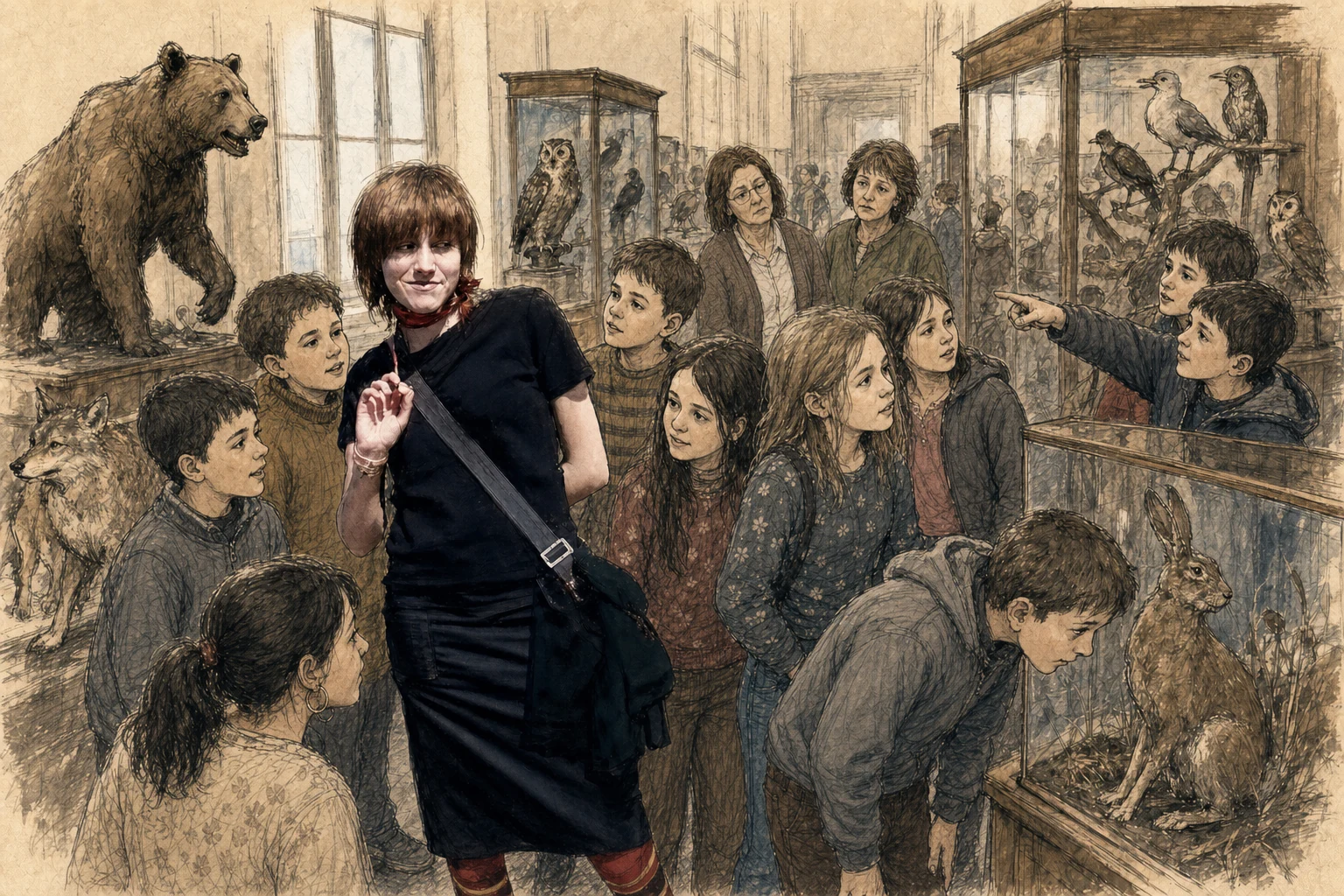
And here I stood in front of this company: a student with no experience, with a headache and a formal right to talk about the animal world.
The main task was not to impart to children a certain amount of scientific knowledge. First, it was necessary to get them to at least stop running and look in my direction. A simple fact like the number of teeth an animal has did not work well. A story was needed: danger, attack, salvation, poison, an incredible ability, or at least some particularly unpleasant habit.
I prepared for the excursions quite carefully. I didn’t have my own computer, so I went to the university computer class and looked for interesting information about animals. I mostly read Russian-language sites: it was easier, and I almost didn’t use English-language sources at that time.
It didn’t occur to me to check the facts I found separately. I chose stories that I could tell the children clearly and that would help hold their attention. Therefore, along with accurate information, spectacular but dubious tales sometimes ended up in my excursion stock.
During some of the stories, the teachers accompanying the group had their eyes popping out of their heads. They probably understood that the excursion briefly left the territory of science, but they never corrected me in front of the children.
Perhaps the old pedagogical discipline was at work. One adult, temporarily appointed as a source of knowledge, should not undermine the authority of another adult in front of schoolchildren. If the guide confidently stated that the wolf knows how to take out a mortgage, the teacher will first wait until the end of the tour and only then carefully clarify the details.
This system reached its highest level near the porcupine.
I told the children that porcupines shoot quills at their enemies. They don’t just leave them in the body of a careless predator upon close contact, but shoot: they notice the enemy, make a decision and open fire.
Today I understand that this is not true. The porcupine does not release its quills at a distance. But then the statement perfectly met all the requirements of a good excursion story. It had a hero, weapons, danger and a clear principle of action. It was possible to work with this fact.
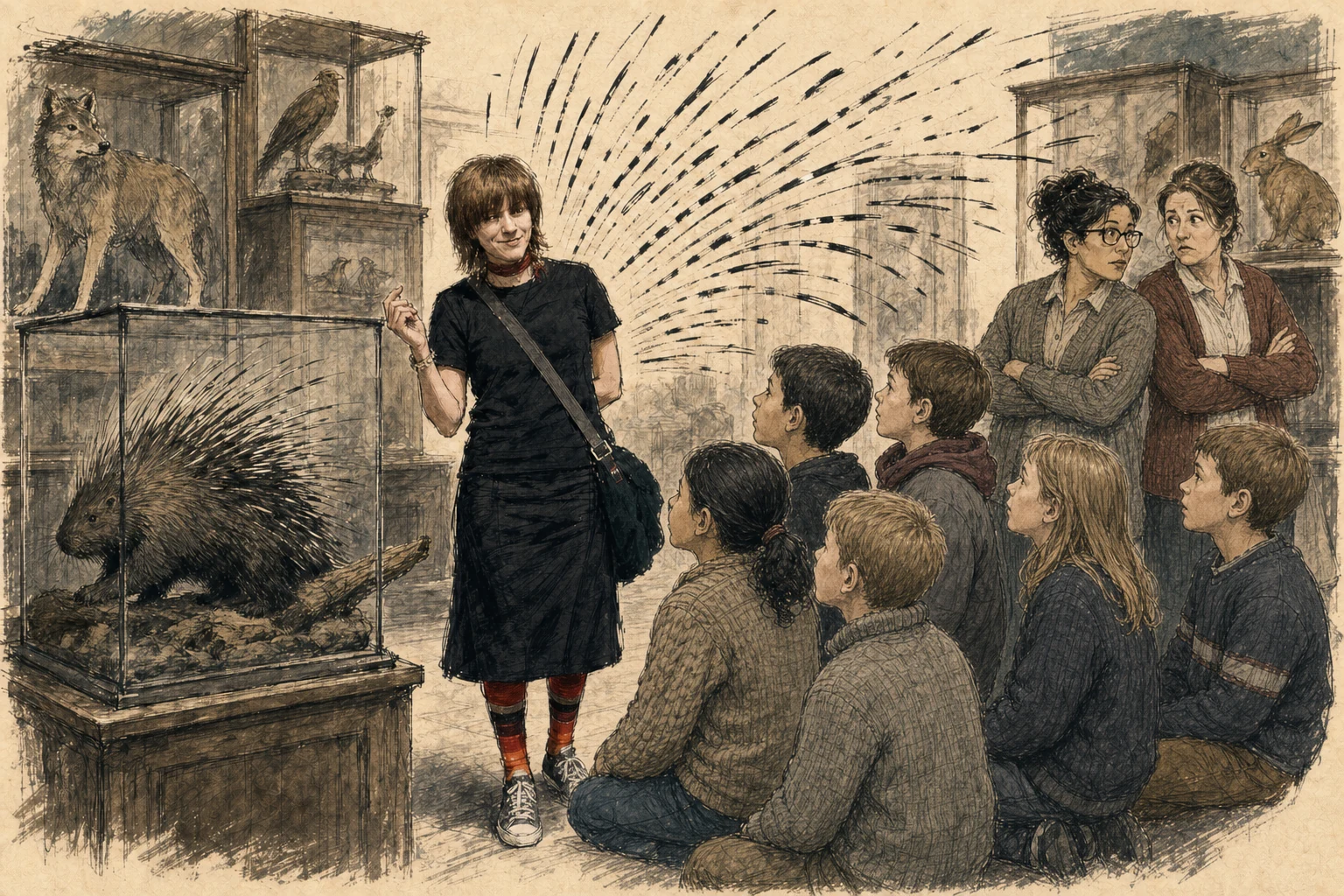
The teachers were silent. The children listened with their mouths open. No one ran, touched the display cases or tried to find out what was behind the bear. Forty schoolchildren represented a porcupine, which turns to the enemy in the right direction and fires a warning salvo.
Perhaps one of them later retold this story at home. Perhaps for years he answered in biology classes that the porcupine’s main weapon is long-range shooting. It is possible that this fact still lives somewhere and is passed on to the next generation without any connection with me and the Tartu Museum.
But that day the excursion was a success.
So I learned an important thing about public authority quite early on. People don't necessarily listen to the person who knows the subject best. Sometimes they listen to a person who is standing in front of an exhibit, speaking with enough confidence and offering a story that is easy to imagine.
Adults may understand that something wrong is happening, but remain silent out of respect for the established order. And the children will go home with new knowledge - bright, convenient and completely wrong.
Of all the inhabitants of the museum, the clawed frog behaved more correctly than the rest. She didn't assert anything, didn't educate anyone, and didn't try to impress anyone. She just hung in the water, sometimes moved her paw and seemed to understand a little more about the structure of the world than we did.