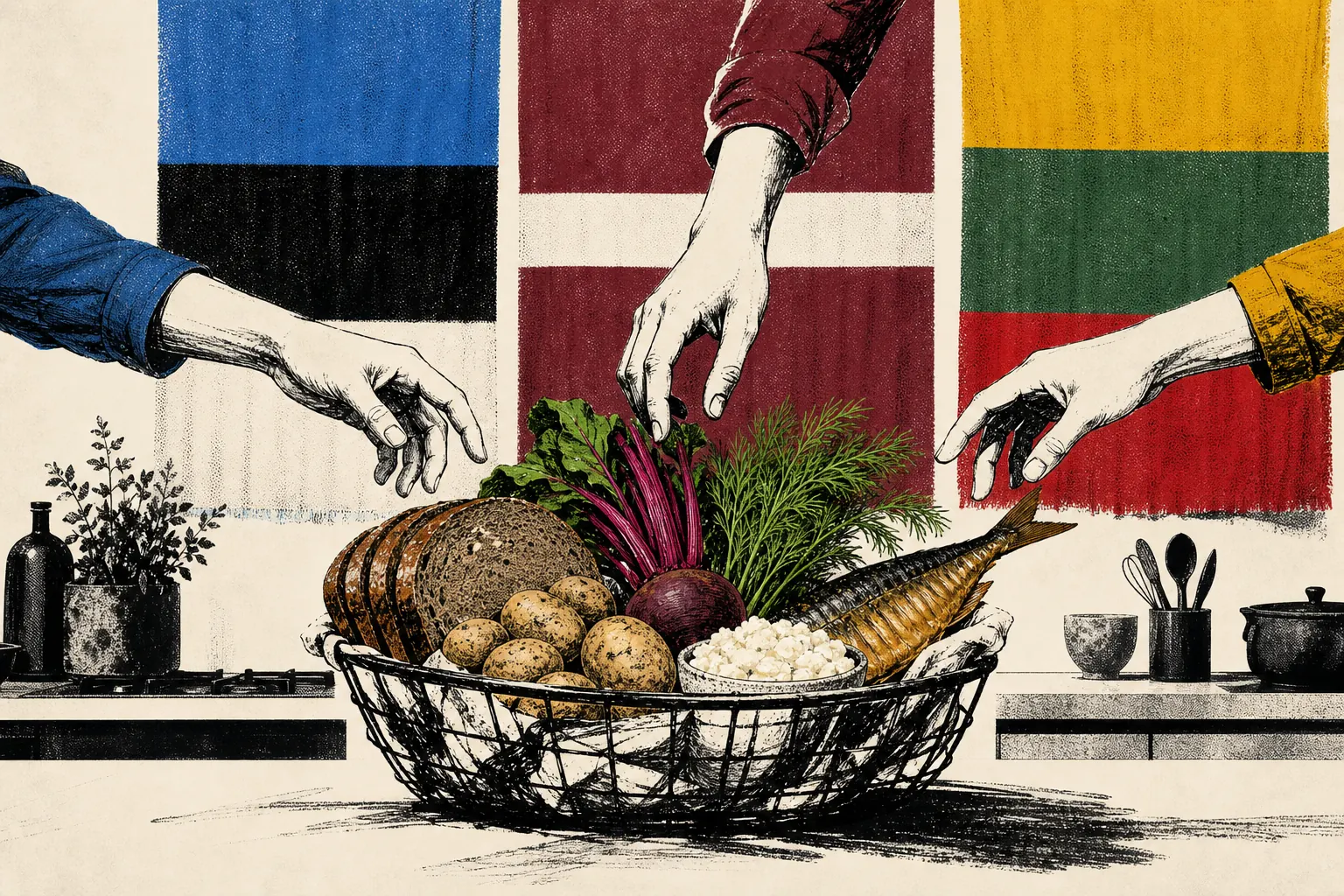

In a culinary dispute, things start out badly: someone puts bread, fish and potatoes on the table, and then declares that this is “a typical cuisine of the country.” The neighbor immediately remembers his grandmother’s table: he saw half of these cooking methods at home, only the dishes were called differently. This is how the usual conversation about the Baltics arises: three flags at the edges of the plate and the confident assumption that somewhere between them there must be a single cuisine.
She's gone. More precisely, not in the form that a tourist brochure would like. Estonia, Latvia and Lithuania have similar storage conditions and the habit of farming with an eye on the long winter. But under these conditions, not three versions of one menu developed, but three different sets of habits and tastes.
The kitchen generally doesn’t fit well into the passport. She moves with a merchant, a bride, a soldier and a refugee. She is influenced by the market, the family recipe book, and the school cafeteria, where the word “mayonnaise” is written over an old inkblot. After a generation, the dish seems local forever. A generation later, it is included in the national canon, a festival is started, and people begin to argue about who cooks better.
A cellar, not a flag
What the Baltic countries have in common begins not with the character of the people, but with the economic logic of reserves. Restrained eating from what can be saved is not a mystical northern soul, but a way to hold on to supplies until the new green.
The set of products was familiar, but they prepared it differently. They ate by the sea differently than in the interior of the country. The city table did not coincide with the village one, the festive one with the everyday one.
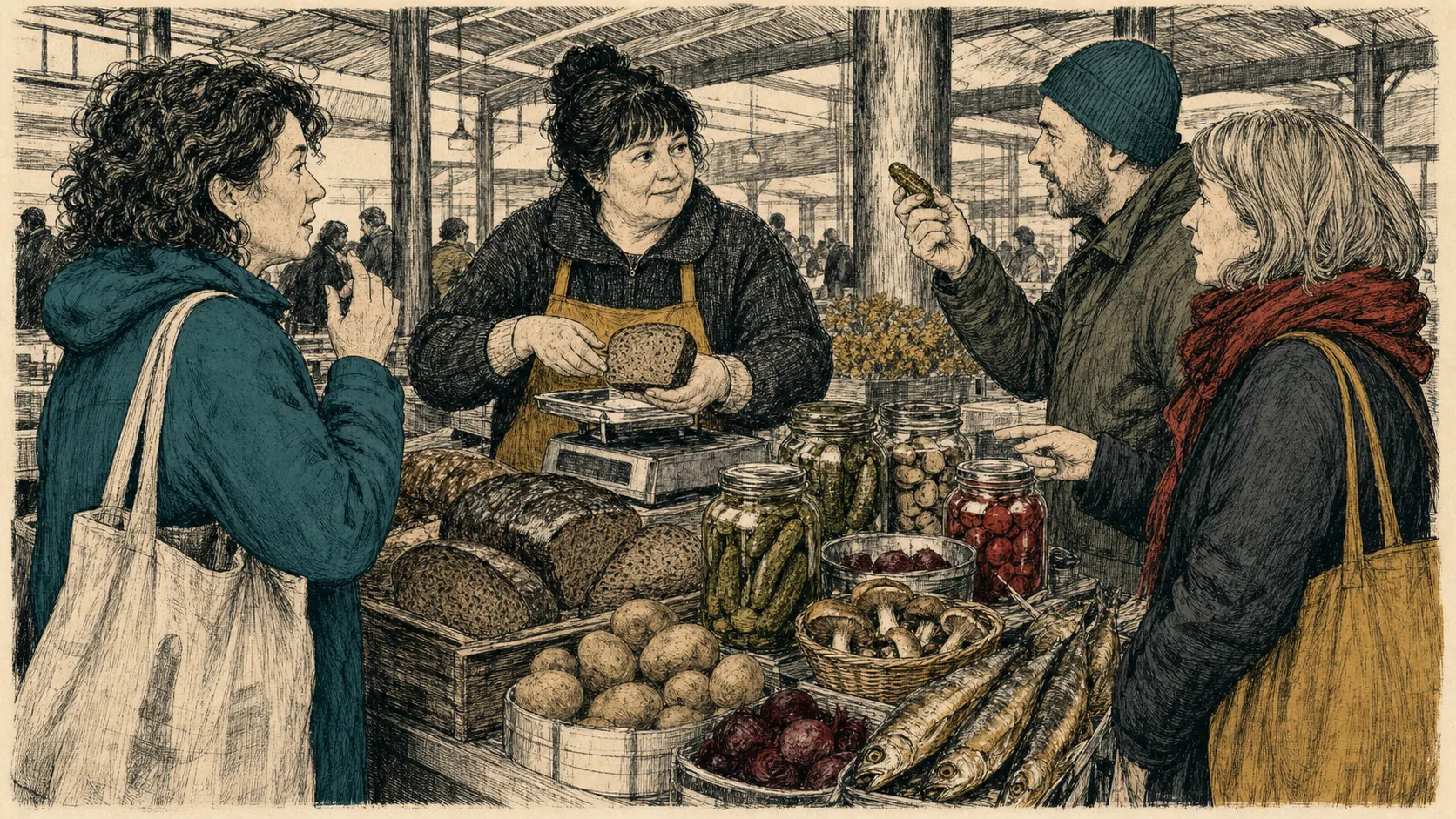
The Baltic-German urban and manor tradition did not belong to the entire population, but constantly exchanged habits and recipes with the local table. It is impossible to imagine the culinary map of Lithuania without the heritage of the Grand Duchy of Lithuania and neighboring communities. In Latvia, the difference between Kurzeme and Latgale sometimes says more about food than the word “Latvian”. In Estonia, the regional traditions of Mulgimaa and Setomaa are not limited to the Tallinn menu.
Therefore, the phrase “Baltic cuisine” is suitable as a conversation starter, but not as a ready-made answer. It describes the proximity of products and techniques. Then you have to figure out who, where and why prepares these dishes.
How a region becomes national
Estonian kama - a good test of common sense. It is a mixture of roasted and ground grains and legumes, which is easy to imagine as an eternal treasure of the entire country. But the modern image of kama is closely related to Mulgimaa. Mulgipuder - potatoes, barley and pork - also bears a specific region in its name. National cuisine is often assembled this way: a regional dish becomes a convenient symbol, and then begins to be represented on behalf of the entire country.
Latvian sklandrausis - a small open rye tartlet with potato and carrot filling - received the status of a guaranteed traditional feature in the European Union in 2013. This is an important legal fact, but in itself it does not prove the antiquity of the recipe. The European Register records the recognized name and production rules; it does not confirm that the recipe appeared on one clear date and has no neighbors. But it shows something else: homemade food can become a matter of state concern when the community considers it its sign.
Lithuanian cepelinai, they are didžkukuliai, look so monumental as if they were found next to the first stone of Vilnius. The Lithuanian Encyclopedia dates the spread of this dish from East Prussia to the beginning of the 20th century. The potato is a latecomer to European cuisine, and the modern canon of Zeppelins is much younger than the holiday tales of antiquity. This does not make Zeppelins any less Lithuanian. It’s just that “Lithuanian” here does not mean eternal and immovable, but accepted, loved and repeated enough times to become a common sign.
WITH šaltibarščiai even more interesting. In Lithuania and abroad, cold beet soup is often served as a Lithuanian dish: white kefir, pink beets, dill, egg, hot potatoes next to it. But cold beet soups live in a large Eastern and Northern European family. The question is not who to take the plate from. The question is why this particular variant became a Lithuanian sign and why it is associated with summer, the family table, the city or a restaurant.
Some dishes have authors
The national canon loves a smooth pedigree: here are the people, here is the field, here is the honest loaf. A real kitchen usually ruins a poster.
Kibinai, for example, cannot honestly be called just Lithuanian pies. Their history in Trakai is connected with the Karaite community. The popularity of a dish throughout the country does not negate its origin, just as a good translation does not negate the name of the author. In any material about Lithuanian cuisine, this is not a minor clarification, but a way not to exclude people from a dish that is now sold on every corner.
The same applies to Jewish, urban German, Russian, Old Believer, Polish and Tatar food. Not for the sake of a mandatory list of cultural markers, but because the cuisine of the region literally evolved from its neighborhood. Erasing this neighborhood to make history more beautiful is like wiping traces of flour from the table before explaining where the bread came from.
Potato trap
Every national conversation about food sooner or later comes down to potatoes. It has become so firmly established in the everyday diet that it is easy to mistake it for a local product that has always been here. But potatoes came to Europe from America and gradually entered the diet. It has become the most important product for the Baltic countries, but it has not always been here.
There is no revelation in this. A cuisine doesn't become fake because its main ingredient is only a few centuries old in the region. On the contrary: this is exactly how it works. A product that comes from outside is adapted to the local way of life and then considered its own. Tradition is not a museum exhibit that is forbidden to touch. If it doesn’t change at all, then it remains in the display case next to the sign.
Researcher of Lithuanian gastronomic culture Rimvydas Lauzikas suggests looking at recipes as an evolving system, rather than a set of untouchable originals. This is a useful idea for the entire Baltic. The recipe changes with trade, harvest and fashion. Sometimes a new stove or a child who refuses to eat dill is enough.
Three dinners from one basket
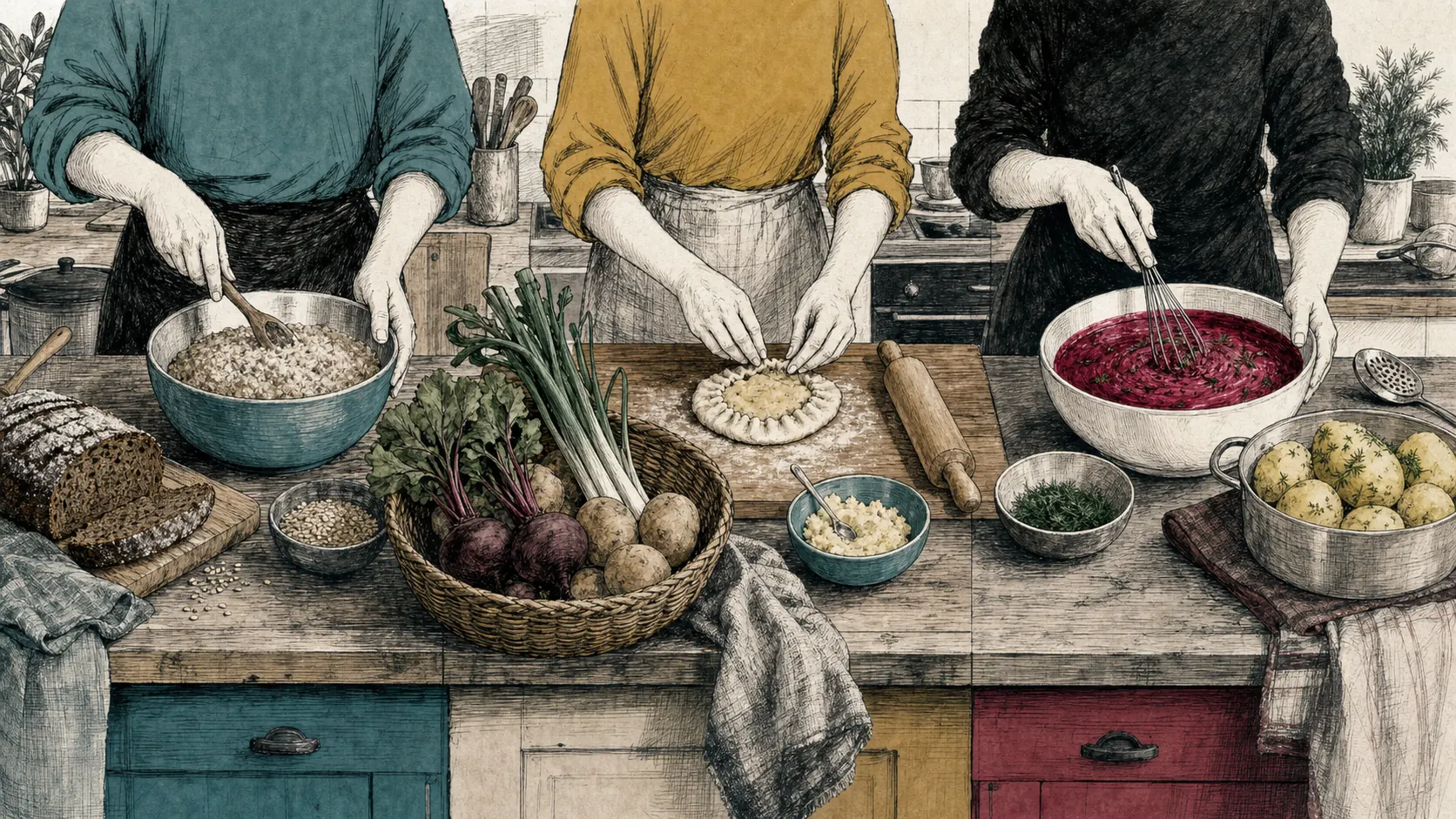
Let's imagine a simple editorial task. At the market they buy black bread, beets, cottage cheese, potatoes, mushrooms and one local fish. No flags on the bag. This basket then goes to three kitchens.
One person will prepare a weekday dinner from this basket, another will prepare a holiday table, a third will remember a family story that cannot be prepared according to exact instructions. In reality, the participants will probably destroy this scheme in the first minute. And it’s good: the task is not to attribute each country its own characteristic flavor, but to hear why people cook familiar dishes this way.
This is where it becomes clear what they are really arguing about at the table. Not “an Estonian cooks Estonian”, but three people comparing products, habits and their own memory. What is considered regular food? What's festive? Which acid is right? Is it possible to replace one dairy product with another? Why did grandma do things differently? In such matters, the kitchen ceases to be a souvenir.
Decision of the gastronomic commission
If you still assemble an imaginary commission on the division of Baltic food, it will have to close the meeting without a winner. Bread, potatoes and fish do not follow the line on the map. Cold soup requires local clarification, and history kibinai shows that the origin of a dish cannot be dissolved in the overall brand.
But the commission may formulate a different decision. The cuisines of Estonia, Latvia and Lithuania are related not by a common menu, but by a similar way of life. The winter here is long, the sea is nearby, and supplies should be enough until it warms up. Differences occur when the same foods are introduced into different household habits.
The difference on the plate is determined not by the line on the map, but by the person’s choice: what story he considers his own and what he puts in the pan when no one is looking.